Coastal Resilience: Insuring Absolute Beachfront Properties Against Rising Tides

By Andre Lang · High-value home insurance specialist
Last updated 3 February 2026
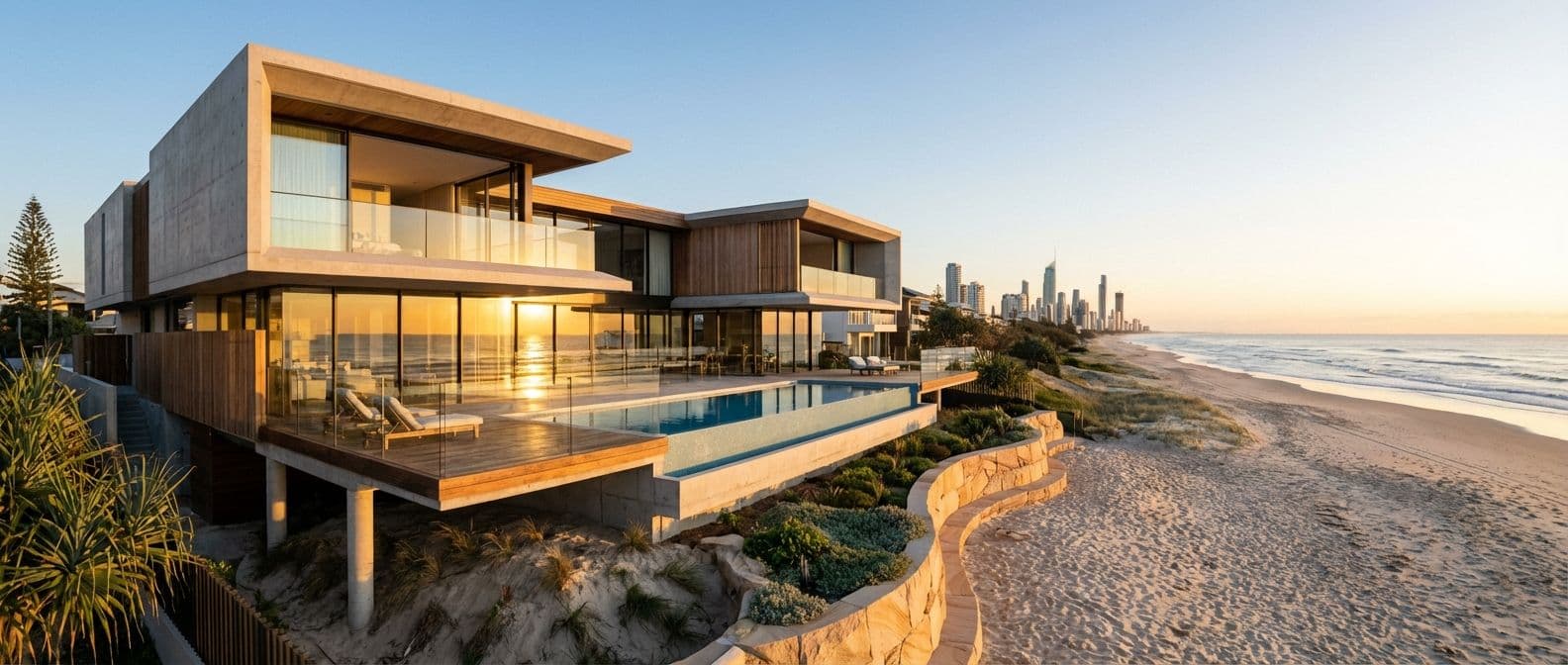
For many Australians, the ultimate lifestyle statement remains the absolute beachfront residence. The rhythmic sound of the Pacific or Indian Ocean and the privilege of stepping directly onto the sand represent the pinnacle of luxury real estate. However, as we move through 2026, the intersection of climate science and insurance underwriting has created a new paradigm for coastal property owners. Coastal resilience is no longer just an environmental buzzword; it is a fundamental pillar of asset protection and financial viability.
The Australian Coastal Context in 2026
Australia’s coastline is home to some of the world's most expensive real estate, from the iconic Northern Beaches of Sydney to the glittering high-rises of the Gold Coast and the rugged beauty of Perth’s western suburbs. Recent data from the Bureau of Meteorology and various climate research bodies indicates that sea levels around the Australian continent are rising at an average rate of 3 to 4 millimetres per year, with some regions experiencing higher variability due to oceanic currents.
This incremental change, while seemingly small, significantly amplifies the impact of king tides and storm surges. For the owner of an absolute beachfront property, this translates to a shifting risk profile that insurers are now tracking with unprecedented precision. The modernisation of risk modelling means that insurers no longer look at entire postcodes but at individual lot-level data to determine premiums.
Understanding the Three Pillars of Coastal Risk
To effectively insure a coastal asset, one must first understand the specific perils that insurers categorise under 'coastal risk'. These are generally divided into three distinct areas:
- Permanent Inundation: The slow, gradual encroaching of sea levels that may eventually submerge low-lying land.
- Coastal Erosion: The removal of sand and rock by wave action, which can undermine the structural integrity of buildings.
- Storm Surge and Tidal Inundation: Temporary flooding events caused by extreme weather, often coinciding with high tides.
While standard home insurance policies often cover 'flash flooding' from rain, they frequently exclude damage caused by 'actions of the sea'. In 2026, the distinction between a storm-driven flood and a sea-driven surge is the most critical clause in any coastal insurance contract.
The Evolving Insurance Market for Luxury Coastal Assets
The insurance landscape has undergone a significant transformation. We are seeing a move away from generic policies toward bespoke, high-value asset coverage. Reinsurance companies—the entities that insure the insurers—have tightened their requirements for Australian coastal exposures following several years of intense storm activity along the Eastern Seaboard.
For properties valued in the multi-million dollar range, standard retail insurers may no longer provide sufficient coverage limits. Instead, owners are turning to the specialist high-net-worth market. These insurers offer 'agreed value' policies and more comprehensive wording but require a higher level of due diligence regarding the property’s physical defences.
Risk Loading and Premium Determinants
In 2026, your premium is dictated by a 'Resilience Score'. Insurers evaluate several factors:
- Floor Level Height: Is the finished floor level (FFL) significantly above the 1-in-100-year flood level?
- Foundation Type: Does the home sit on deep-drilled concrete piles that reach bedrock, or is it on a simple slab?
- Proximity to the 'Erosion Line': How many metres of stable land exist between the structure and the mean high-water mark?
- Community Mitigation: Is the property protected by a council-maintained sea wall or a natural dune buffer?
Engineering Resilience: Hard vs. Soft Defences
Coastal resilience strategy is broadly split into two categories: engineering-led 'hard' defences and nature-based 'soft' defences. The most successful coastal developments in 2026 utilise a hybrid approach.
Hard defences, such as revetment walls and concrete sea walls, provide a definitive barrier against wave energy. However, they can be controversial due to their impact on beach aesthetics and the potential to accelerate erosion on neighbouring properties. From an insurance perspective, a certified, engineered sea wall is often the single most effective way to lower a risk profile.
Soft defences involve the use of 'living shorelines'. This includes restoring coastal dunes with native species like Spinifex, which help trap sand and build a natural reservoir against storm demand. Many luxury estates now incorporate these as part of their landscaping, blending security with aesthetic appeal.
Legal Disclosure and Property Value
The Australian real estate market has become hyper-aware of coastal hazard disclosures. In many jurisdictions, any property identified as being in a 'coastal hazard zone' must have this clearly noted on the contract of sale. Prospective buyers in 2026 are increasingly engaging coastal engineers to perform independent audits before committing to a purchase.
While some feared these disclosures would tank property values, the reality has been different. High-value beachfront land remains in limited supply. Instead of a price collapse, we have seen a 'flight to quality'. Properties with proven resilience features and clear insurance pathways continue to command record prices, while those at extreme risk without a mitigation plan see longer days on market and deeper price negotiations.
Practical Steps for Beachfront Owners
If you currently own or are looking to acquire an absolute beachfront property, the following steps are essential for maintaining insurability and protecting your investment:
- Conduct a Coastal Hazard Audit: Hire a specialist consultant to assess the specific erosion and inundation risks for your lot over the next 30 to 50 years.
- Review Policy Exclusions: Specifically look for 'Action of the Sea' exclusions. In 2026, some boutique insurers offer buy-backs for these exclusions for a higher premium.
- Invest in Structural Upgrades: If renovating, consider flood-venting sub-floors, using salt-spray resistant materials, and ensuring all electrical systems are elevated above the surge line.
- Engage with Local Council: Be an active participant in local Coastal Management Programs (CMPs). The collective defence of a coastline is always more effective than individual efforts.
The Future of Coastal Living
The dream of the Australian beachfront lifestyle is not disappearing; it is evolving. Resilience is becoming as much a part of the luxury home's DNA as a designer kitchen or an infinity pool. As we navigate the remainder of the decade, the ability to secure comprehensive insurance will be the ultimate validation of a property’s long-term worth.
In conclusion, while the tides may be rising, our ability to adapt through sophisticated engineering, intelligent data, and bespoke insurance solutions is rising to meet the challenge. For the informed owner, an absolute beachfront property remains a crown jewel of any portfolio, provided that resilience is placed at the centre of the strategy.
Frequently Asked Questions
Are absolute beachfront properties still insurable in Australia in 2026?
Yes, but the market has become highly segmented. While most properties remain insurable, premiums are increasingly reflective of specific site-based risks, such as elevation and historical erosion data. Properties with proactive mitigation measures often secure more competitive terms.
What is the difference between 'hard' and 'soft' coastal defence?
Hard defence refers to physical structures like sea walls, groynes, and rock armour. Soft defence involves natural solutions like dune nourishment, planting native vegetation, and beach replenishment to absorb wave energy.
How does a Section 10.7 certificate affect insurance?
In states like New South Wales, a Section 10.7 certificate discloses whether a property is subject to coastal hazard policies. Insurers use this data to assess risk; a notation regarding future inundation can lead to higher premiums or specific policy exclusions.
Can I reduce my insurance premium through property modifications?
Potentially. Modernising a property with flood-resilient materials, elevating electrical systems, and contributing to collective sea wall projects are factors that specialised insurers look for when underwriting high-value coastal assets.
Related insights
Explore our cover

Andre LangHigh-value home insurance specialist
Andre Lang is a high-value home insurance specialist who advises owners of architecturally significant and high-net-worth Australian homes on protecting their property, fine art, and collections.