Insurance for Australia's
Heritage Homes
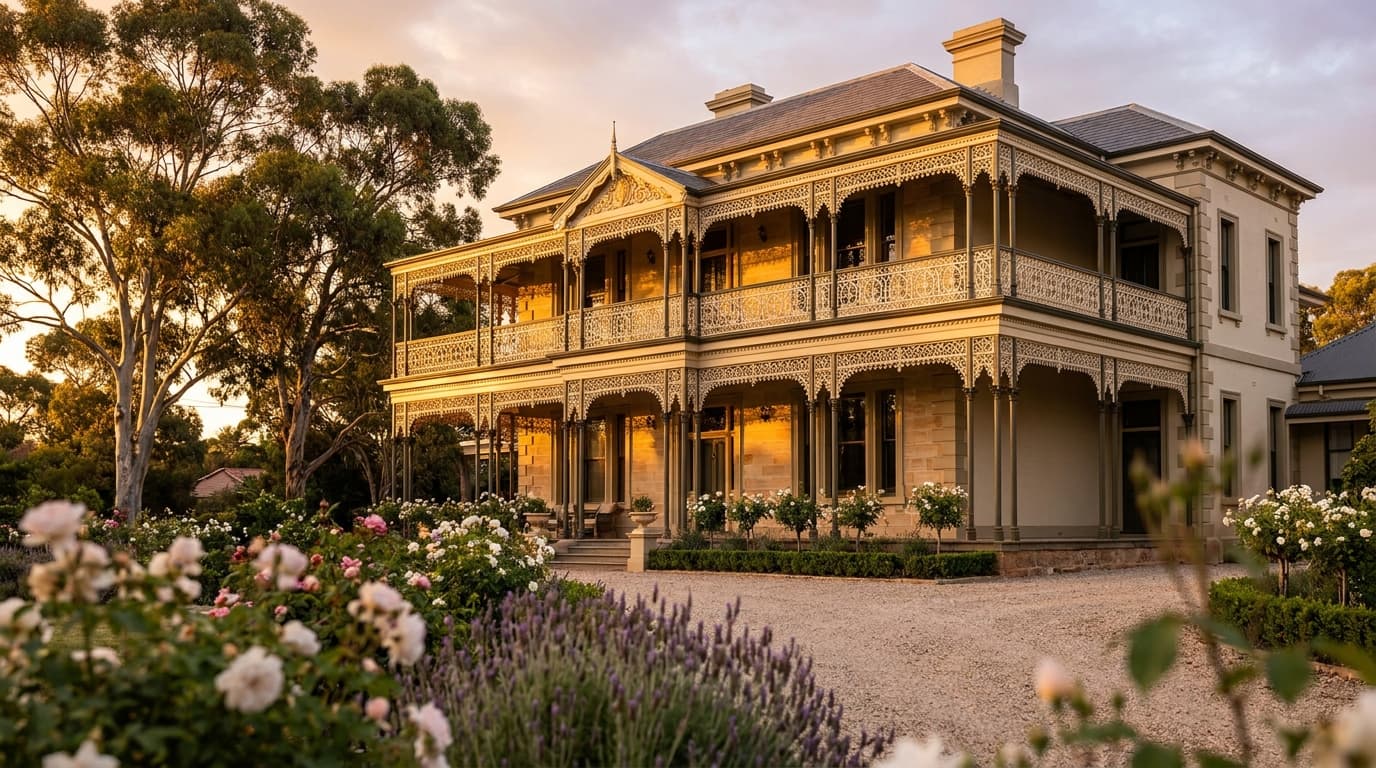
Specialist heritage home insurance that understands the unique obligations, restoration complexities, and irreplaceable character of historically significant Australian properties.
Protecting Australia's Architectural Legacy Through Specialist Heritage Home Insurance
Heritage homes need specialist insurance because listed and period properties must be repaired with original materials, trades and methods that standard policies neither price nor require. Heritage cover reflects the real cost of like-for-like restoration, including period joinery, masonry and compliance with heritage-listing obligations, so a damaged home can be restored rather than simply rebuilt.
Heritage homes represent far more than bricks and mortar. They are living records of Australia's architectural, cultural, and social history, and insuring them demands an approach fundamentally different from standard residential cover. Whether you own a stately Federation residence in one of Sydney's leafy inner-west suburbs, a Victorian-era terrace in Melbourne's heritage precincts, a Georgian sandstone homestead in Tasmania, or an Art Deco apartment building on the Gold Coast, each property carries legal obligations, material specifications, and craftsmanship requirements that standard insurers rarely comprehend, let alone accommodate.
Heritage listing in Australia operates across multiple tiers. The Australian Government maintains the National Heritage List for places of outstanding significance to the nation, while each state and territory administers its own heritage register, such as the NSW State Heritage Register or Victoria's Heritage Register. At the local level, councils impose heritage overlays through their planning schemes, which can apply to individual properties or entire precincts. Many properties also carry classifications from the National Trust, which, while not legally binding, signal cultural importance and often influence planning decisions. Each layer of listing introduces specific constraints on what may be altered, demolished, or rebuilt, and these constraints have profound insurance implications.
At Luxury Cover, our senior brokers have decades of combined experience arranging heritage home insurance for some of Australia's most significant private residences. We work exclusively with underwriters who recognise the difference between replacing a standard timber frame and sourcing hand-hewn hardwood joinery that matches an 1890s original. We understand that a heritage claim is not simply about restoring a building to a functional state; it is about preserving its historical integrity in compliance with heritage legislation, conservation management plans, and the expectations of heritage advisory committees.
- Heritage-specific agreed value assessments that account for specialist restoration costs, not standard rebuilding estimates
- Cover structured around heritage compliance obligations at national, state, and local government levels
- Access to underwriters experienced with heritage overlay zones, conservation management plans, and heritage impact statements
- Broker-managed claims that coordinate heritage architects, conservation consultants, and specialist tradespeople from day one
Why Heritage Properties Demand Specialised Insurance Coverage
Standard rebuild rates assume modern materials and methods, but heritage properties require conservation-grade work that costs significantly more. They also carry obligations under heritage listings that dictate how repairs must be done. Without specialist cover, owners risk a settlement that funds a modern rebuild rather than a faithful restoration of an irreplaceable property.
The fundamental challenge of heritage home insurance lies in the gap between what standard policies provide and what heritage legislation requires. A conventional home insurance policy typically covers the cost of rebuilding your home to its pre-loss condition using modern materials and construction methods. For a heritage-listed property, this approach is not merely inadequate; it can be unlawful. Heritage legislation across all Australian jurisdictions requires that repairs and restorations to listed properties use materials, techniques, and design approaches consistent with the property's period of significance. This is not optional. Heritage councils have the authority to mandate specific restoration approaches, and non-compliance can result in significant penalties.
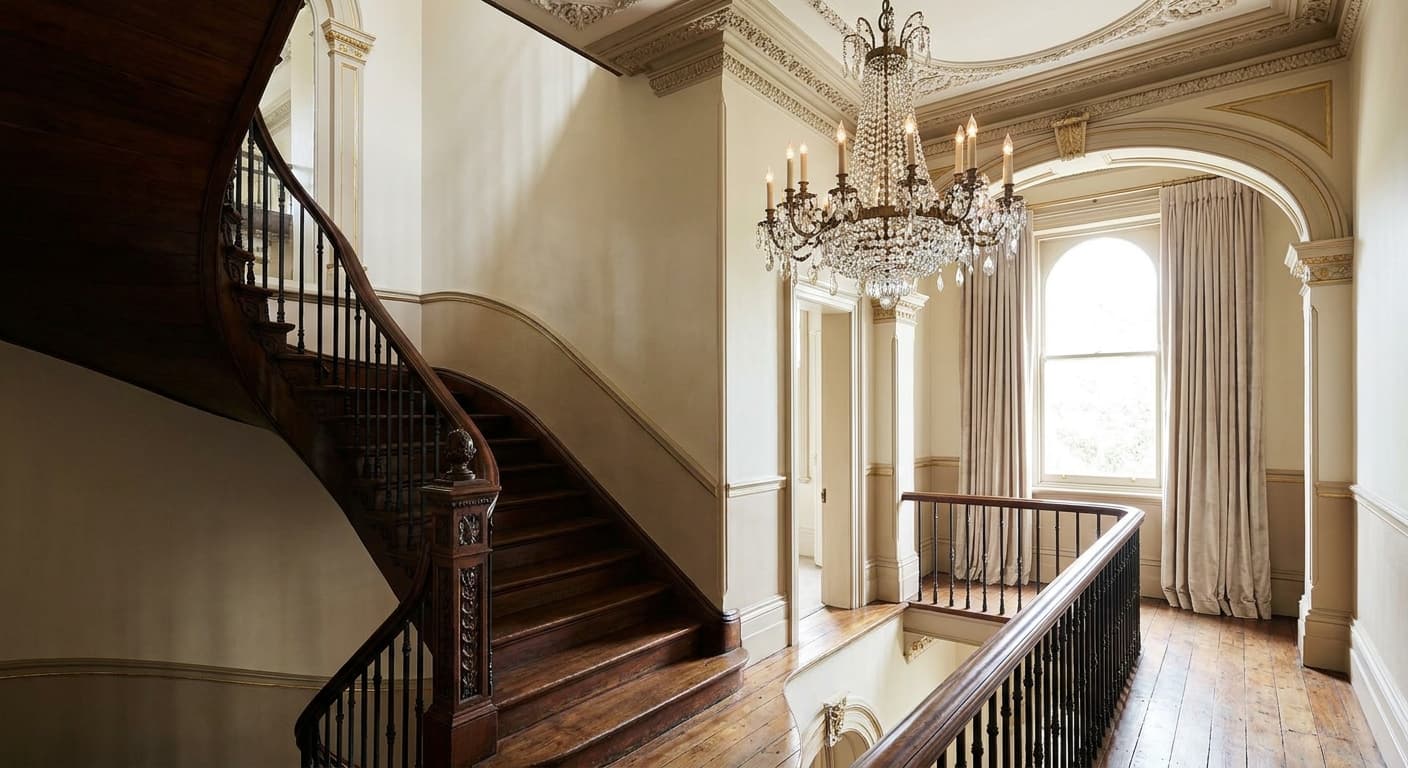
Consider the practical reality of a heritage claim. If fire damages the ornate pressed-metal ceilings of your Federation home, a standard insurer might propose replacing them with modern plasterboard. Heritage regulations, however, will likely require those ceilings to be restored using period-appropriate pressed-metal panels, fabricated by specialist artisans using traditional techniques. The cost difference can be extraordinary, often three to five times the standard replacement figure, and sometimes considerably more for rare or complex decorative elements.
Material matching requirements present another layer of complexity that standard insurers consistently underestimate. Heritage restoration frequently demands the sourcing of specific stone types from particular quarries, the milling of timber species that may no longer be commercially harvested, the recreation of original render and lime mortar mixes, and the replication of historic glazing profiles. In some cases, materials must be imported from overseas to match the original construction, particularly for properties built using European stone, imported tiles, or specialist hardware. Each of these requirements carries a cost premium that a properly structured heritage home insurance policy must anticipate.
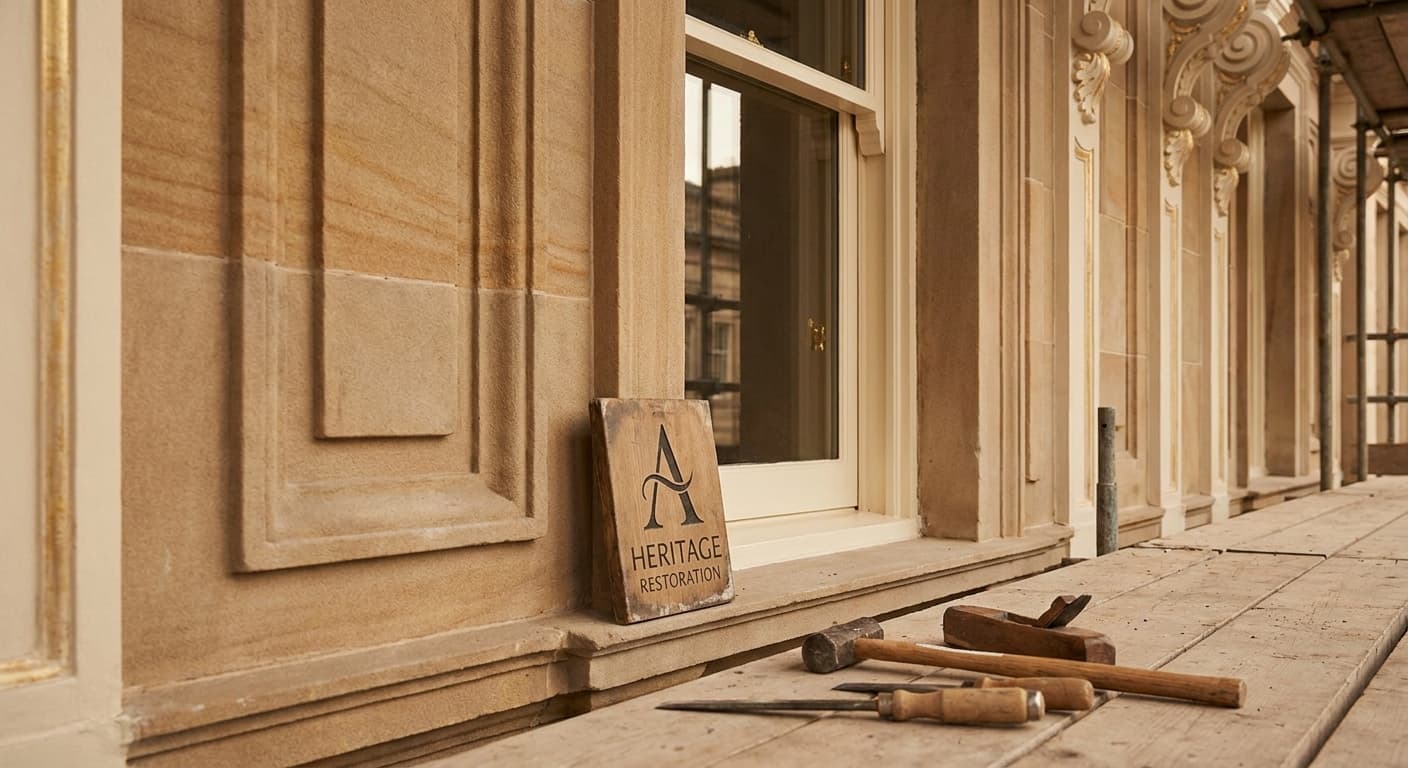
The requirement for specialist tradespeople further compounds the cost equation. Heritage restoration work cannot be performed by standard builders. It requires stonemasons trained in traditional techniques, plasterers who can replicate ornate cornicing and ceiling roses, joiners capable of reproducing period-accurate timber profiles, and glaziers experienced with heritage sash windows and leadlight panels. These tradespeople are in limited supply across Australia, and their rates reflect both their expertise and the painstaking nature of conservation work. A heritage home insurance policy must provide sufficient coverage to engage these specialists without forcing compromises that would breach heritage requirements.
- Heritage restoration costs typically exceed standard rebuilding estimates by 200% to 500%, depending on the property's significance and listing requirements
- Heritage councils can mandate specific materials, techniques, and tradespeople, leaving property owners with no discretion to reduce costs through substitution
- Delays are inherent in heritage claims: heritage impact assessments, council approvals, and specialist material sourcing can extend timelines significantly beyond standard rebuilds
- Standard policies frequently exclude or severely limit coverage for the very elements that make heritage properties significant, such as decorative plasterwork, original joinery, and period hardware
- Without specialist cover, heritage homeowners face the impossible choice between non-compliant repairs and uncovered restoration costs that can reach into the hundreds of thousands of dollars
Comprehensive Heritage Home Coverage
Heritage Restoration & Compliance Cover
Full coverage for restoration to heritage-compliant standards, including the use of period-appropriate materials, traditional construction techniques, and specialist tradespeople mandated by heritage councils. This extends to the preparation of heritage impact statements, conservation architect fees, and heritage council application costs that are an unavoidable part of the heritage claims process. Your policy ensures that every element of the restoration meets the requirements of the relevant heritage legislation and any applicable conservation management plan, so that your property's historical integrity is preserved without personal financial exposure.
Agreed Value Heritage Assessment
Heritage properties cannot be accurately valued using standard quantity surveying methods. We arrange specialist heritage valuations conducted by assessors who understand the true cost of sourcing heritage-grade materials, engaging conservation-qualified tradespeople, and meeting the prescriptive requirements of heritage overlays. Your sum insured is established as an agreed value based on this specialist assessment, eliminating the risk of underinsurance that plagues heritage homeowners who rely on generic rebuilding calculators or standard valuation approaches that fail to account for the heritage premium.
Extended Temporary Accommodation
Heritage restorations routinely take two to three times longer than equivalent standard rebuilds, owing to heritage council approval processes, specialist material procurement lead times, and the inherently slower pace of traditional construction methods. Our heritage home insurance policies include extended temporary accommodation provisions that reflect the realistic timeline of a heritage restoration project, ensuring you are not left funding your own living arrangements when the restoration inevitably extends beyond the timeframes a standard policy would cover.
Heritage Contents & Period Features Protection
Many heritage homes contain original fixtures, fittings, and built-in elements that exist in a grey area between building and contents coverage. Original fireplaces, heritage light fittings, antique door furniture, stained glass panels, and period bathroom fixtures all require explicit coverage that acknowledges both their replacement complexity and their contribution to the property's heritage significance. Our policies are structured to eliminate gaps between building and contents cover for these irreplaceable period elements, with agreed value schedules for significant items.
How We Protect You
Heritage Property Assessment
Your dedicated heritage insurance broker begins with a thorough review of your property's heritage status, examining all applicable listings at national, state, and local levels, any conservation management plans, heritage overlay provisions, and previous heritage council determinations. We review the property's architectural period, construction materials, significant decorative elements, and any previous restoration work to build a complete picture of the insurance risk and compliance landscape.
Specialist Heritage Valuation
We commission a heritage-specific rebuilding valuation from assessors experienced in conservation construction costing. This valuation accounts for the full cost of heritage-compliant restoration, including specialist materials, traditional construction techniques, conservation architect supervision, heritage council fees, and the engagement of qualified heritage tradespeople. The result is an accurate agreed value that reflects the true cost of restoring your property to its heritage-compliant standard.
Bespoke Policy Structuring
Drawing on our relationships with underwriters who genuinely understand heritage property risk, we structure a policy that addresses every dimension of your heritage insurance needs. This includes heritage-compliant rebuilding cover, extended temporary accommodation, period feature and fixture schedules, heritage garden and landscape protection where applicable, and any additional covers dictated by your property's specific heritage obligations and your personal requirements.
Heritage Claims Advocacy
In the event of a claim, our heritage claims team takes immediate control of the process, coordinating heritage architects, conservation consultants, heritage council liaison, specialist tradesperson engagement, and material sourcing. We manage the entire heritage compliance workflow on your behalf, ensuring the restoration meets all legislative requirements while keeping you informed at every stage. Our advocacy ensures that insurers honour their obligations to restore your property to its heritage-compliant standard, not merely to a functional condition.
Frequently Asked Questions
How does heritage listing affect my home insurance requirements?
Heritage listing at any level, whether national, state, or local, imposes legal obligations on how your property may be repaired or restored following damage. These obligations typically require the use of period-appropriate materials, traditional construction techniques, and heritage-qualified tradespeople. Standard home insurance policies are designed around modern rebuilding methods and materials, which means they will almost certainly fall short of covering the actual cost of a heritage-compliant restoration. Heritage home insurance is specifically structured to cover these elevated costs, including heritage architect fees, conservation consultant engagement, heritage impact assessments, and the sourcing of specialist materials. Without it, you face a significant personal financial exposure every time your property requires repair work that triggers heritage compliance requirements.
What types of heritage properties do you insure?
We arrange heritage home insurance for the full spectrum of historically significant Australian residential properties. This includes Federation homes and Queen Anne residences from the 1890s through to the 1920s, Victorian-era terraces and Italianate mansions, Georgian colonial homesteads, Edwardian cottages and bungalows, interwar Art Deco apartments and houses, mid-century modernist residences of architectural significance, and rural heritage homesteads with associated outbuildings. We also cover properties within heritage conservation areas or heritage overlay zones that may not be individually listed but are still subject to heritage planning controls. Our brokers are experienced with properties across all Australian states and territories, each of which has its own heritage legislation and council processes.
Why is heritage home insurance more expensive than standard home insurance?
The premium for heritage home insurance reflects the genuinely higher cost of insuring a property where the method and materials of repair are prescribed by legislation rather than determined by the most cost-effective approach. Heritage restoration requires specialist tradespeople whose rates are significantly higher than standard builders, materials that must be sourced to match originals rather than substituted with modern equivalents, conservation architects to oversee the work, and heritage council approval processes that extend project timelines. The sum insured for a heritage property is typically substantially higher than for an equivalent-sized modern home because the rebuilding cost per square metre is dramatically greater. While the premium reflects this reality, it is the cost of ensuring that a heritage claim does not become a personal financial catastrophe. Many heritage homeowners who attempt to save on premiums by using standard policies discover the true cost of underinsurance only when they need to make a claim.
What happens if my heritage home is damaged and the heritage council disagrees with the insurer's proposed repairs?
This is one of the most common and costly problems heritage homeowners face with standard insurance policies. If a heritage council determines that the insurer's proposed repair method or materials do not meet heritage requirements, the council has the authority to refuse approval, effectively halting the restoration until a compliant approach is adopted. With a standard policy, the additional cost of meeting the council's requirements typically falls on the homeowner. Our heritage home insurance policies are specifically structured to cover the cost of heritage-compliant restoration as determined by the relevant heritage authority. Furthermore, our claims team has extensive experience liaising with heritage councils across Australia and understands how to navigate the approval process efficiently, minimising delays and ensuring that restoration proposals are heritage-compliant from the outset rather than requiring costly revisions.
Do I need heritage home insurance if my property is only subject to a local heritage overlay rather than a state or national listing?
Yes. Local heritage overlays impose binding planning controls that affect how your property may be repaired or modified, and these controls can be just as prescriptive as state or national listing requirements. Properties within heritage overlay zones are typically required to maintain their contribution to the streetscape character of the area, which means external repairs must use sympathetic materials and construction methods. Even internal works may be subject to heritage controls if the overlay extends to the interior of properties, as it does in some heritage precincts. A local heritage overlay can require heritage architect involvement, council approval for repairs, and the use of specific materials and techniques, all of which carry costs beyond what a standard policy covers. We recommend heritage home insurance for any property subject to heritage planning controls at any level, as the financial exposure from an uncovered heritage compliance requirement can be substantial regardless of whether the listing is national, state, or local.
Explore Our Solutions
Prestige Home Insurance
Distinguished coverage for premium Australian properties with bespoke policy structures and agreed value protection.
Mansion Insurance
Complete estate and grounds protection for Australia's grandest properties, including outbuildings, landscaping, and ancillary structures.
Fine Art Insurance
Protect your private art collection with agreed value coverage, transit protection, and specialist fine art claims handling.
Safeguard Your Heritage Property
Speak with a senior heritage insurance broker who understands the unique obligations and restoration complexities of Australia's most historically significant residences.