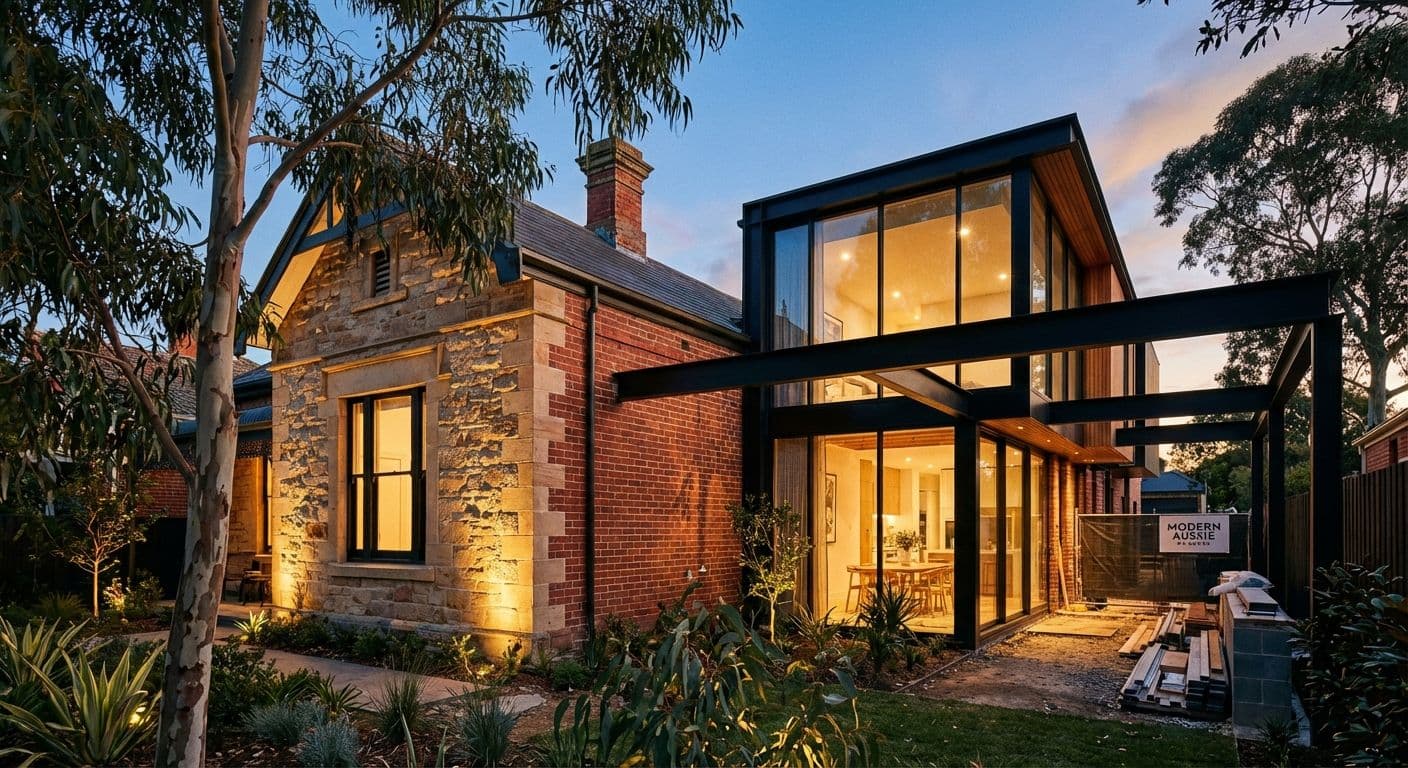
Protecting the Build: Managing Risk During High-End Renovations and Extensions

By Andre Lang · High-value home insurance specialist
Last updated 7 February 2026
In 2026, the Australian luxury residential market continues to evolve, with homeowners increasingly opting for sophisticated extensions and deep-scale renovations over new builds. However, the complexity of integrating ultra-modern architecture with existing structures—often heritage-listed or site-constrained—introduces a unique profile of risk. Protecting a multi-million dollar investment requires more than just a reputable builder; it demands a strategic approach to risk management that spans legal, financial, and physical safeguards.
The Landscape of High-End Australian Renovations in 2026
The current economic climate in Australia has shifted the focus of high-end builds. With material costs stabilising but labour expertise remaining at a premium, the 'build quality' risk has been superseded by 'project continuity' risk. For homeowners in prestigious suburbs—from Toorak to Mosman—the stakes involve not just the capital outlay, but the preservation of existing property value and the seamless execution of bespoke designs.
Navigating this landscape requires an understanding of three core pillars: Contractual Integrity, Insurance Adequacy, and Site Governance. Failing to address any one of these can lead to catastrophic financial losses or protracted legal battles that overshadow the joy of a newly transformed home.
Structural and Site-Specific Risk Assessment
Every renovation begins with the unknown. In high-end projects, where designers often push the boundaries of cantilevered floors, subterranean basement extensions, or expansive glass walls, the structural integrity of the 'old' meets the 'new' is a primary point of failure.
Heritage Constraints and Dilapidation Reports
For properties with heritage overlays, the risk of non-compliance with local council regulations is significant. Unforeseen structural decay in Victorian or Edwardian timber frames often only comes to light once the 'skin' of the building is removed. We recommend a comprehensive pre-construction audit that includes:
- Geotechnical reports to assess soil stability for new footings.
- Detailed dilapidation reports for both the subject property and immediate neighbours.
- Structural engineering peer reviews for complex load-bearing modifications.
Contractual Risk: Beyond the Handshake
In the luxury sector, standard HIA or Master Builders contracts are often used, but they may require specific annexures to cover the nuances of high-value finishes. One of the most significant risks in 2026 is the variation management process. High-end builds often involve imported materials—Italian marble, German cabinetry, or French lighting—which are susceptible to currency fluctuations and shipping delays.
To manage this, ensure your contract specifies the handling of 'Prime Cost' (PC) items and 'Provisional Sums' (PS). Transparency is key; insisting on a 'Cost Plus' arrangement might offer more flexibility for bespoke builds, but it requires a high level of trust and rigorous auditing of the builder’s invoices. Conversely, a 'Fixed Price' contract provides more certainty but may lead to builders cutting corners if material prices spike unexpectedly.
The Insurance Gap: Protecting Your Investment
Perhaps the most misunderstood aspect of renovating is where standard home insurance ends and construction insurance begins. Most Australian homeowners assume their existing policy remains in force during a renovation. In reality, once a site is handed over to a builder, or once works exceed a certain value (often as low as $50,000), standard cover may be suspended or severely restricted.
Contract Works and Public Liability
A robust Contract Works policy is essential. It covers the new work, the materials on-site, and—crucially—the existing structure. Many high-end owners are moving toward Principal Arranged Insurance (PAI). This allows the homeowner to control the policy terms rather than relying on the builder's potentially inadequate or lapsed insurance.
In a luxury context, this is vital for protecting items like custom joinery or imported fixtures that may sit on-site before installation. If these are stolen or damaged and the builder’s insurance has a low sub-limit, the homeowner is left to bridge the gap.
Logistics: Managing High-Value Materials and Security
High-end renovations often turn a quiet residential street into a bustling logistics hub. Managing the delivery and storage of premium materials is a risk management priority. In 2026, site security has moved beyond simple fencing. Smart construction sites now employ AI-driven surveillance and biometric access to ensure that only authorised personnel are on-site.
Consider the following logistical safeguards:
- Just-in-time delivery for high-value appliances to minimise on-site storage time.
- Climate-controlled storage for sensitive materials like unsealed natural stone or specialty timbers.
- Documented 'handover' of responsibility for materials once they arrive on-site.
Compliance, Standards, and the NCC 2025/2026
Australia’s National Construction Code (NCC) has seen significant updates regarding energy efficiency and livability standards. A major risk for high-end renovations is the failure to integrate these standards into the design phase, leading to expensive retrofitting or the inability to obtain a Final Certificate of Occupancy.
High-end extensions often feature large spans of glass. Ensuring these meet the latest thermal performance requirements (Section J of the NCC) is critical. Furthermore, if your property is in a Bushfire Attack Level (BAL) rated zone, the materials used for your extension must meet stringent fire-resistance criteria, which can significantly impact both the budget and the aesthetic options available.
The Human Element: Professional Synergy
The greatest risk to any build is a breakdown in communication between the tripartite of Owner, Architect, and Builder. In the luxury space, a dedicated Project Manager or 'Owner's Representative' is no longer a luxury—it is a necessity for risk mitigation. This professional acts as a buffer, ensuring that the design intent is met without compromising the budget or the structural timeline.
When selecting your team, prioritise those with a proven track record in high-end residential work. The nuances of a $500k renovation are vastly different from a $5m extension. The latter requires specialised knowledge of high-performance building envelopes, integrated home automation, and complex hydronic heating/cooling systems.
Best Practices for High-Net-Worth Property Owners
To ensure your build is protected from inception to completion, follow this executive checklist:
- Engage an independent insurance broker to audit your existing policy and the builder’s policy before signing the contract.
- Implement a 'staged payment' schedule that aligns strictly with verified milestones, backed by photos and site inspections.
- Request proof of Domestic Building Insurance (DBI) for each stage, especially in states like Victoria where it is mandatory for projects over a certain value.
- Maintain a 'Contingency Fund' of at least 15-20% for high-end renovations, as the level of finish and potential for unforeseen site issues is higher than in standard builds.
Conclusion
Managing risk during a high-end renovation is an exercise in foresight. By identifying structural, contractual, and insurance-related vulnerabilities early, Australian homeowners can protect their capital and ensure their vision is realised without the stress of preventable setbacks. As we move through 2026, the key to a successful build remains the same: a combination of elite professional expertise, ironclad legal protection, and a proactive approach to site governance.
Frequently Asked Questions
Does my standard home insurance cover high-end renovations?
Generally, no. Most standard home and contents policies have strict limits or total exclusions for damage occurring during major construction. You typically need a specific Contract Works and Public Liability policy, and you must notify your existing insurer to ensure the 'existing structure' remains covered.
What is Principal Arranged Insurance (PAI) and why is it recommended for luxury builds?
PAI is insurance taken out by the homeowner rather than the builder. It provides the owner with direct control over the policy coverage, ensures that the policy doesn't lapse if the builder faces insolvency, and offers broader protection for high-value assets that a builder's standard policy might not cover.
How do I manage the risk of builder insolvency in 2026?
Mitigate this risk by conducting thorough due diligence, using bank guarantees instead of large upfront deposits, ensuring all Domestic Building Insurance (DBI) certificates are in place before payment, and considering a 'Cost Plus' contract with high transparency or a well-vetted fixed-price agreement.
Are dilapidation reports necessary for residential extensions?
Yes, especially in high-density areas or for heritage properties. A dilapidation report documents the condition of your property and neighbouring properties before work starts, providing vital evidence if disputes arise regarding structural cracks or damage caused by the build.
Related insights
Explore our cover

Andre LangHigh-value home insurance specialist
Andre Lang is a high-value home insurance specialist who advises owners of architecturally significant and high-net-worth Australian homes on protecting their property, fine art, and collections.