More Than a Garage: Protecting Multi-Million Dollar Private Automotive Showrooms

By Andre Lang · High-value home insurance specialist
Last updated 10 January 2026
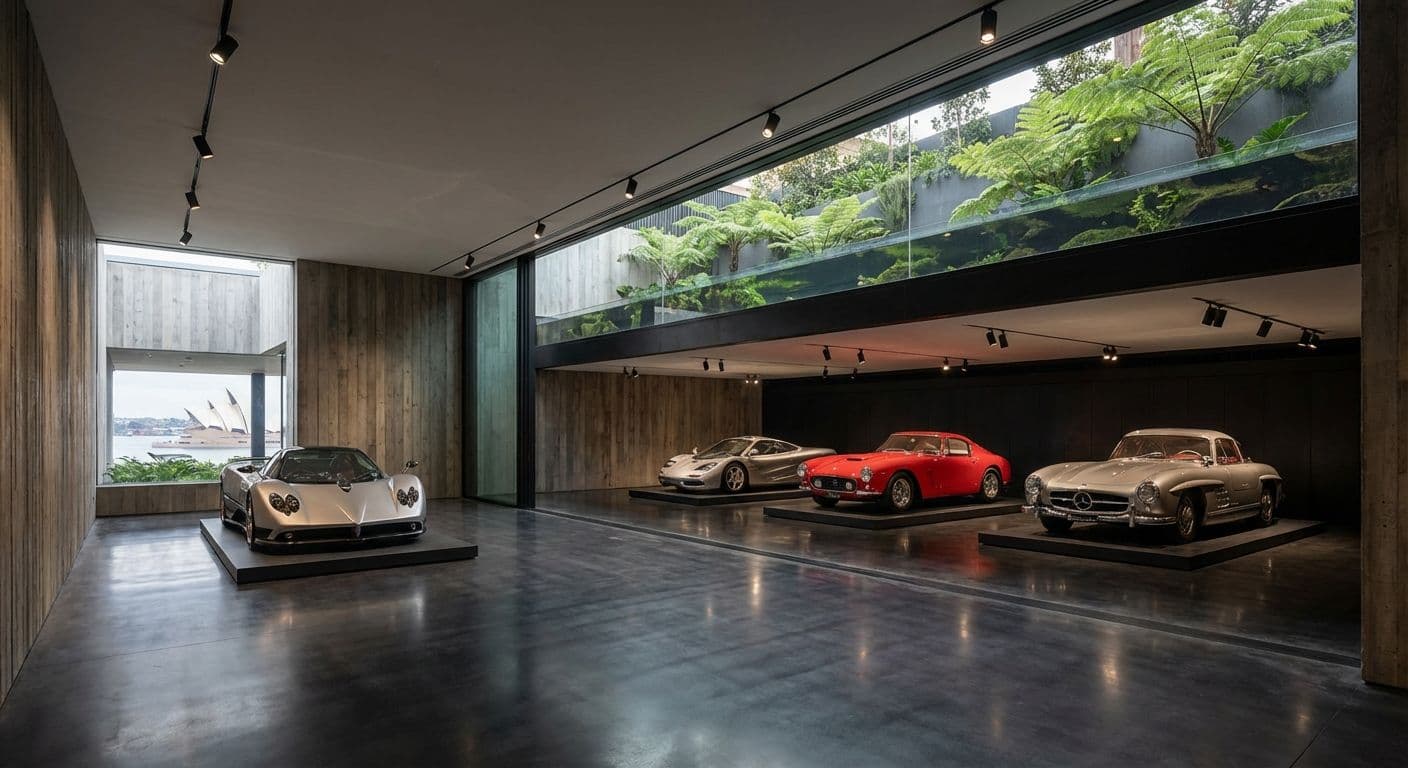
For the modern high-net-worth collector in Australia, the traditional garage has become obsolete. As automotive assets—ranging from limited-run Ferraris to pristine air-cooled Porsches—climb into the multi-million dollar bracket, the space they inhabit must evolve. In 2026, the 'private automotive showroom' is no longer just a storage facility; it is a sophisticated, climate-controlled sanctuary that blends museum-grade preservation with cutting-edge architectural design.
Protecting these investments requires a multi-disciplinary approach. From the chemical composition of the flooring to the wavelengths of the lighting and the integration of AI-driven security, every element must be engineered to mitigate risk and celebrate the aesthetic of the machine. This guide explores the essential components of the world’s most advanced private car galleries.
1. Environmental Precision: The Science of Preservation
In the Australian climate, environmental control is the first line of defense. Whether situated in the humid coastal stretches of Queensland or the fluctuating temperatures of Melbourne, a private showroom must maintain a stable internal atmosphere to prevent the degradation of sensitive materials.
Climate and Humidity Control
Fluctuating temperatures lead to the expansion and contraction of metal panels, which can eventually result in paint micro-cracking. More dangerously, high humidity promotes oxidation (rust) and the growth of mold in vintage leathers and carpets. The industry standard for 2026 involves:
- Constant Temperature: Maintaining a range between 18°C and 22°C.
- Relative Humidity (RH): A locked-in setting of 45-50% RH to keep gaskets supple without risking corrosion.
- Air Filtration: HEPA-grade filtration systems to remove dust and particulate matter that can act as abrasives on high-gloss finishes.
2. Advanced Security: Beyond the Perimeter
Security for a multi-million dollar collection must be layered. While physical barriers remain important, the 2026 standard leverages 'Invisible Security'—technology that monitors threats before they reach the building.
Biometric and AI Integration
Modern showrooms utilize facial recognition and biometric scanners for entry, ensuring that only authorized personnel and family members can access the space. Furthermore, AI-enhanced CCTV systems now use 'behavioral analytics' to identify suspicious activity outside the perimeter, alerting security teams before a breach occurs.
- Seismic Sensors: Integrated into the floor to detect vibrations from heavy machinery or drilling.
- Encrypted Smart Glass: Windows that can transition from transparent to opaque at the touch of a button, hiding the collection from prying eyes when the owner is away.
- Remote Kill Switches: For high-tech collections, integrated GPS and remote immobilization systems are standard.
3. Lighting Design: The Art of the Reveal
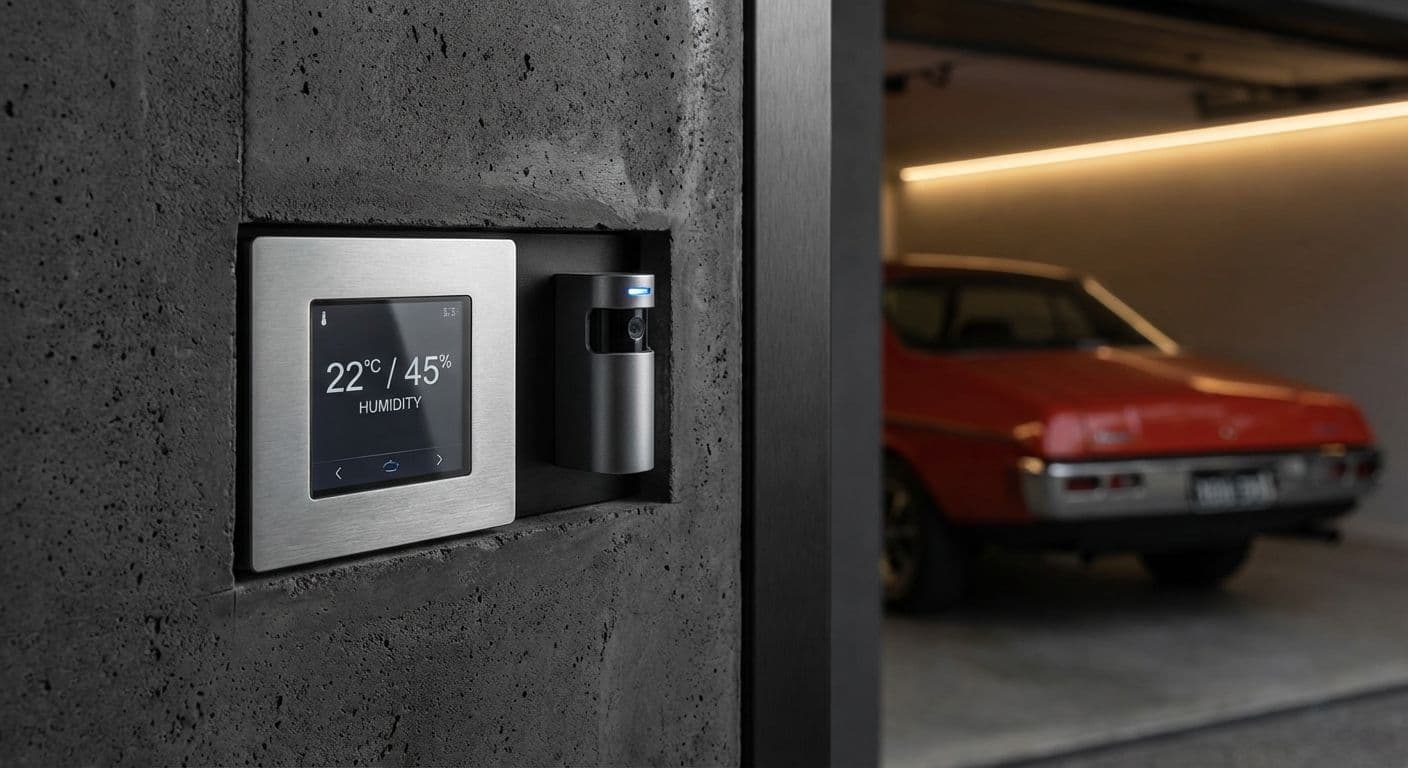
Lighting in a private showroom serves two purposes: showcasing the vehicles' lines and protecting their surfaces. Conventional garage lighting often uses high-intensity bulbs that emit UV radiation and heat, both of which are detrimental to paint and interior plastics.
Museum-Grade Illumination
Specialists recommend LED systems with a high Color Rendering Index (CRI) of 95 or above. This ensures that the paint colors—particularly on historic models—are seen exactly as they were intended. Additionally, diffusers are used to eliminate 'hot spots' on the car’s bodywork, creating a smooth, liquid-like reflection across the silhouette.
4. Flooring Science: Resilience and Aesthetics
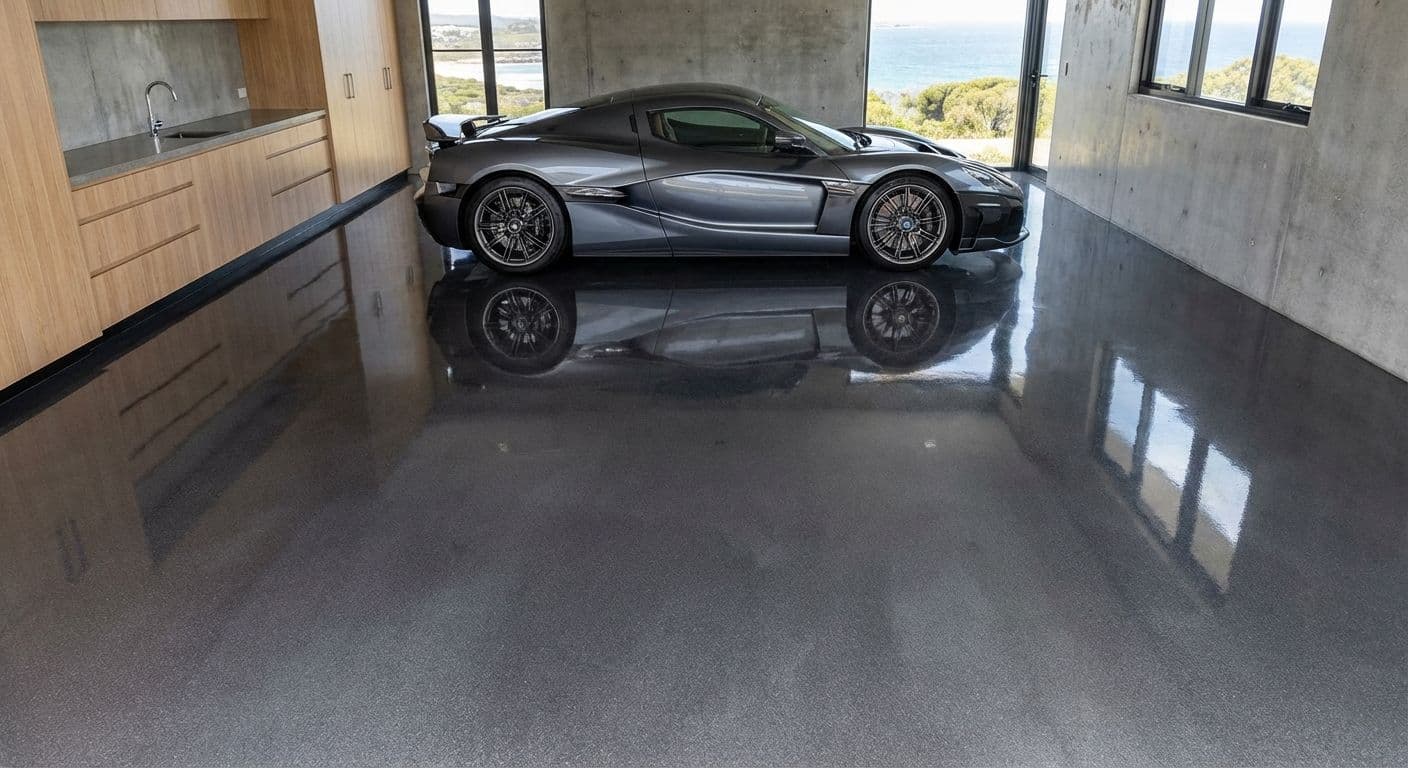
The floor of a showroom is subjected to unique stresses. It must withstand 'hot tire pick-up,' resist chemical spills from oil or brake fluid, and provide a non-slip surface that remains easy to clean.
Polyaspartic vs. Epoxy Coatings
While epoxy has been the standard for years, 2026 sees a shift toward polyaspartic coatings. These offer superior UV resistance (they won't yellow over time) and are significantly more durable. For a more industrial-luxe aesthetic, many Australian collectors are opting for polished concrete treated with high-performance densifiers and sealants.
5. Specialized Fire Suppression
A fire in a showroom containing rare Ferraris and McLarens is a nightmare scenario. Standard water-based sprinkler systems can often cause as much damage as the fire itself, ruining electronics and delicate interior trim.
Professional galleries now utilize 'Clean Agent' fire suppression systems. These systems release an odorless, colorless gas (such as Novec 1230 or FM-200) that interrupts the combustion process at a molecular level. Crucially, these gases leave no residue and are safe for both the vehicles and any people present in the room.
6. The Australian Insurance Landscape in 2026
Insuring a multi-million dollar collection requires more than a standard policy. Australian underwriters for luxury assets now look for specific 'risk-mitigation markers' when determining premiums and coverage limits.
- Agreed Value Policies: Essential to ensure that the payout matches the true collector market value, rather than a depreciated book value.
- Automatic Increase Clauses: To account for the rapid appreciation of specific 'blue chip' marques.
- Transit Coverage: Ensuring the cars are covered when being moved for maintenance or to events like the Formula 1 Australian Grand Prix or local Concours d'Elegance.
7. Future-Proofing: EV and Hydrogen Infrastructure
As the automotive world transitions toward electrification, even the most traditional car galleries must adapt. A future-proofed showroom includes integrated high-capacity EV charging stations that are discreetly hidden when not in use.
For the ultra-modern collector, there is also the consideration of battery health management. Smart chargers that monitor and maintain battery voltage for long-term storage are essential to prevent the 'bricking' of expensive EV battery packs. Furthermore, dedicated ventilation zones are being designed to manage the specific thermal risks associated with high-performance lithium-ion batteries.
Conclusion: The Ultimate Tribute
A multi-million dollar car collection is more than a display of wealth; it is a curation of history, engineering, and art. Protecting that collection requires a facility that is as advanced as the vehicles it houses. By focusing on environmental precision, layered security, and specialized infrastructure, Australian collectors can ensure their automotive legacy remains pristine for decades to come.
Frequently Asked Questions
What is the ideal humidity level for a high-value car collection?
For most collections, maintaining a relative humidity (RH) of 45% to 50% is ideal. In Australia's humid coastal regions like Brisbane or Sydney, a dedicated dehumidification system is essential to prevent oxidation and mold growth on interior fabrics.
Why is gaseous fire suppression preferred over water sprinklers?
Water-based sprinklers can cause catastrophic damage to electrical systems and interior leathers. Gaseous systems, such as Novec 1230, extinguish fires by removing heat without leaving residue or damaging the vehicles' delicate components.
How does 'hot tire pick-up' affect showroom flooring?
Hot tire pick-up occurs when heat from tires causes them to expand and bond with inferior floor coatings. Upon cooling, the tire shrinks and pulls the coating off the substrate. Professional showrooms use polyaspartic or high-grade epoxy coatings to prevent this.
Are there specific insurance requirements for private car galleries in Australia?
Yes, high-value collections often require 'Agreed Value' policies rather than market value. Insurers in 2026 typically mandate Grade A monitored alarm systems, fire suppression, and often climate-controlled environments for premium discounts.
Related insights
Explore our cover

Andre LangHigh-value home insurance specialist
Andre Lang is a high-value home insurance specialist who advises owners of architecturally significant and high-net-worth Australian homes on protecting their property, fine art, and collections.