Building for the Future: Why Sustainable Luxury and Off-Grid Prestige Require Specialised Cover

By Andre Lang · High-value home insurance specialist
Last updated 26 January 2026
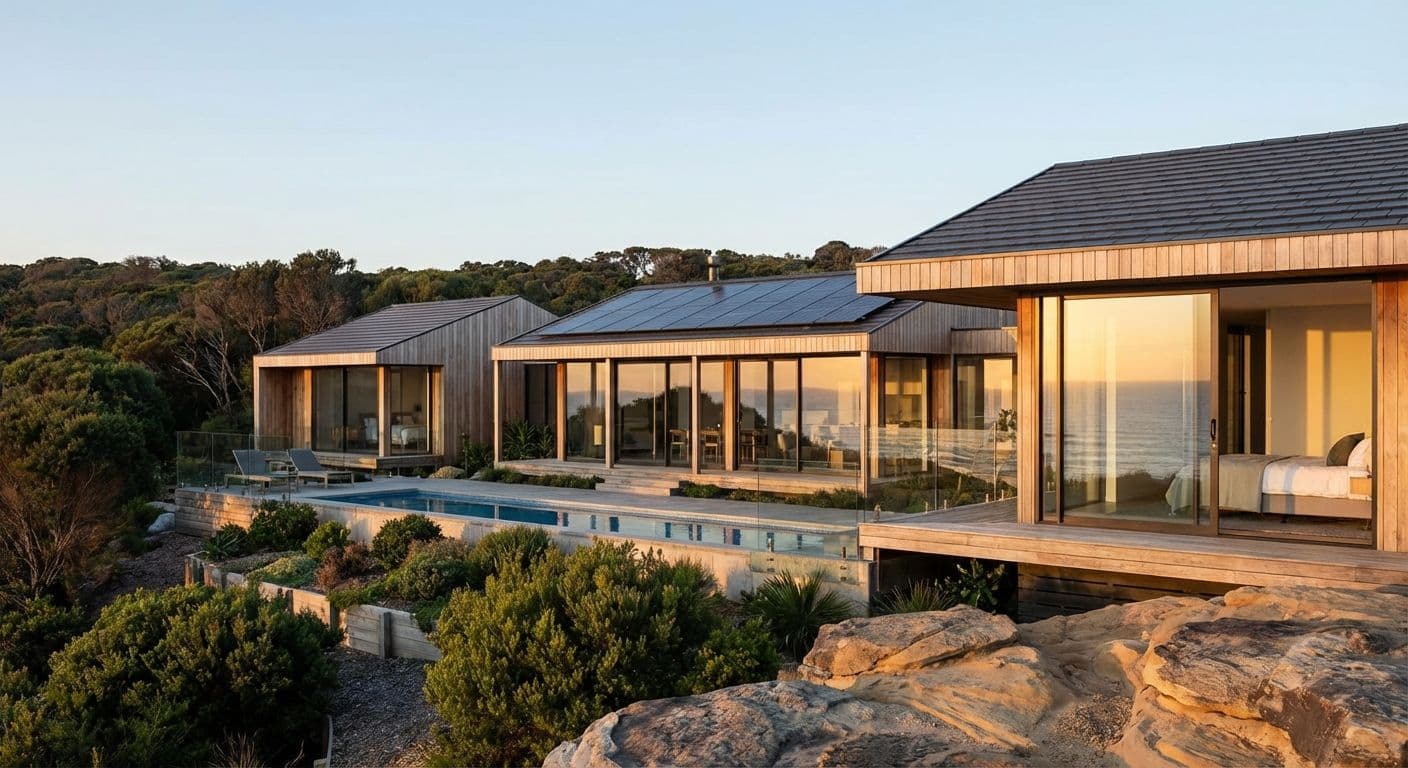
The landscape of Australian prestige real estate is undergoing a radical transformation. In 2026, the definition of luxury has migrated from mere opulence to something far more sophisticated: autonomy and environmental stewardship. From the rugged coastlines of Tasmania to the sprawling hinterlands of Noosa, the nation's most discerning homeowners are commissioning 'off-grid prestige' estates that combine architectural brilliance with total self-sufficiency.
However, as these sustainable marvels rise, a significant challenge has emerged in the insurance sector. Mass-market policies, designed for suburban brick-and-tile dwellings, are fundamentally ill-equipped to handle the complexities of high-value sustainable builds. For the owner of an eco-estate, 'standard' cover is no longer just inadequate—it is a financial risk in itself.
The Anatomy of Sustainable Luxury
Sustainable luxury is not just about 'going green'; it is about utilising the world’s most advanced building technologies to create a home that is resilient, efficient, and aesthetically timeless. In the Australian context, this often involves several key elements that differ significantly from conventional construction:
- Bespoke Eco-Tech: Advanced photovoltaic glass, vertical-axis wind turbines, and industrial-scale lithium-ion or flow-battery storage systems.
- Regenerative Materials: The use of Cross-Laminated Timber (CLT), rammed earth, and hempcrete, which offer superior thermal mass but are often classified as 'non-standard' by traditional underwriters.
- Water Autonomy: Complex atmospheric water generators, multi-stage ultraviolet filtration, and greywater recycling systems integrated into the home's core infrastructure.
- Passive Design Excellence: Passivhaus certification standards that require airtight construction and specialised Heat Recovery Ventilation (HRV) systems.
Why Traditional Insurance Fails the Eco-Prestige Owner
The primary issue lies in valuation and the 'Total Sum Insured'. Most insurance algorithms are based on square-metre averages for standard builds. They do not account for the premium cost of sustainable materials or the specialised labour required to install and repair them.
1. The Reinstatement Gap
If a custom-engineered sustainable estate in a remote Victorian valley suffers damage, the cost to rebuild is substantially higher than a standard home. Sourcing CLT from specialised Australian manufacturers or importing high-performance glazing from Europe involves logistical costs that standard policies simply do not cover. Without specialised cover, the 'gap' between the insurance payout and the actual cost of restoration can run into the millions.
2. Off-Grid Infrastructure Vulnerability
For a prestige home that is 100% off-grid, the energy and water systems are not just 'add-ons'—they are life-support systems. If a lightning strike fry the inverter array or a bushfire damages the solar farm, the home becomes uninhabitable. Specialised insurance provides higher sub-limits for these assets and often includes coverage for 'alternative accommodation' that reflects the homeowner’s lifestyle while repairs are underway.
The Remote Logistics Factor
Many of Australia's most impressive sustainable builds are located in 'lifestyle' regions—coastal cliffs, dense forests, or mountain ridges. While these locations offer privacy and beauty, they pose a nightmare for traditional insurers. From an underwriting perspective, the 'distance to the nearest fire station' or 'accessibility for heavy machinery' are critical risk factors.
A specialised prestige policy understands this. It doesn't just look at the location as a 'danger zone'; it looks at the home's internal defences. A sustainable home built to BAL-FZ (Bushfire Attack Level Flame Zone) standards using non-combustible materials is often a lower risk than a suburban home built thirty years ago. Specialist brokers work with engineers to prove this resilience, often resulting in more favourable terms that reward the owner's investment in safety.
Cybersecurity and the Smart Eco-Home
In 2026, sustainable luxury is inextricably linked with 'smart' technology. To manage energy loads and water usage effectively, these homes rely on complex IoT (Internet of Things) networks. This introduces a new layer of risk: cyber-physical threats. A breach in the home's network could, in theory, disable security systems or disrupt climate control, causing physical damage to art collections or wine cellars.
Standard policies rarely mention cyber-liability for homeowners. Specialised prestige cover, however, is increasingly incorporating protections against digital intrusion, ensuring that the 'brain' of your sustainable home is as protected as its walls.
How to Secure Your Sustainable Legacy
If you are currently building or have recently completed a high-value sustainable or off-grid home, the following steps are essential to ensure your asset is properly protected:
- Obtain a Professional Valuation: Do not rely on your builder's contract price alone. Commission a specialist valuer who understands the replacement cost of sustainable tech and remote logistics.
- Audit Your Systems: Ensure every off-grid component (batteries, filtration, turbines) is itemised in your policy schedule.
- Highlight Resilience: Provide your broker with certificates for fire-resistance, thermal performance, and smart-home security protocols to demonstrate the reduced risk profile of the build.
- Review 'Loss of Use' Clauses: Ensure your policy provides for high-end temporary accommodation if your home’s specialised systems fail and render the property uninhabitable.
Conclusion: Protecting Innovation
Building for the future requires a forward-thinking approach to risk. Sustainable luxury is the new gold standard for Australian living, offering a lifestyle of independence and responsibility. However, the innovation that makes these homes so desirable also makes them unique in the eyes of the law and the insurance market.
As we move further into 2026, the gap between traditional insurance and modern architectural reality will only widen. For the owner of an off-grid prestige estate, specialised cover is not an optional extra—it is the final, essential component of a truly sustainable future.
Frequently Asked Questions
Does standard home insurance cover off-grid energy systems?
While many policies cover basic solar panels, they often have low sub-limits that do not reflect the true replacement cost of industrial-grade battery arrays, micro-grids, or custom hydro-electric systems found in prestige off-grid estates. Specialised cover ensures these critical assets are valued at their full reinstatement cost.
Are homes built with Cross-Laminated Timber (CLT) harder to insure?
Traditional insurers may view CLT or other 'non-standard' sustainable materials with caution due to a lack of actuarial data. However, specialised luxury insurers understand the fire-retardant properties and structural integrity of modern mass timber, providing tailored coverage that reflects the actual risk profile.
How does a remote location impact my prestige home insurance premium?
Location impacts the 'Cost of Reinstatement'. If a property is in a remote area like the Byron Bay hinterland or the Blue Mountains, the cost to transport specialised trades and materials after a claim is significantly higher. A specialised policy accounts for these logistical complexities.
Can I get lower premiums for a highly sustainable, fire-resistant home?
Yes. In 2026, many specialist insurers offer 'resilience discounts' for homes built to high Bushfire Attack Level (BAL) standards or those using non-combustible sustainable materials. Demonstrating your home's superior build quality can often lead to more competitive terms.
Related insights
Explore our cover

Andre LangHigh-value home insurance specialist
Andre Lang is a high-value home insurance specialist who advises owners of architecturally significant and high-net-worth Australian homes on protecting their property, fine art, and collections.