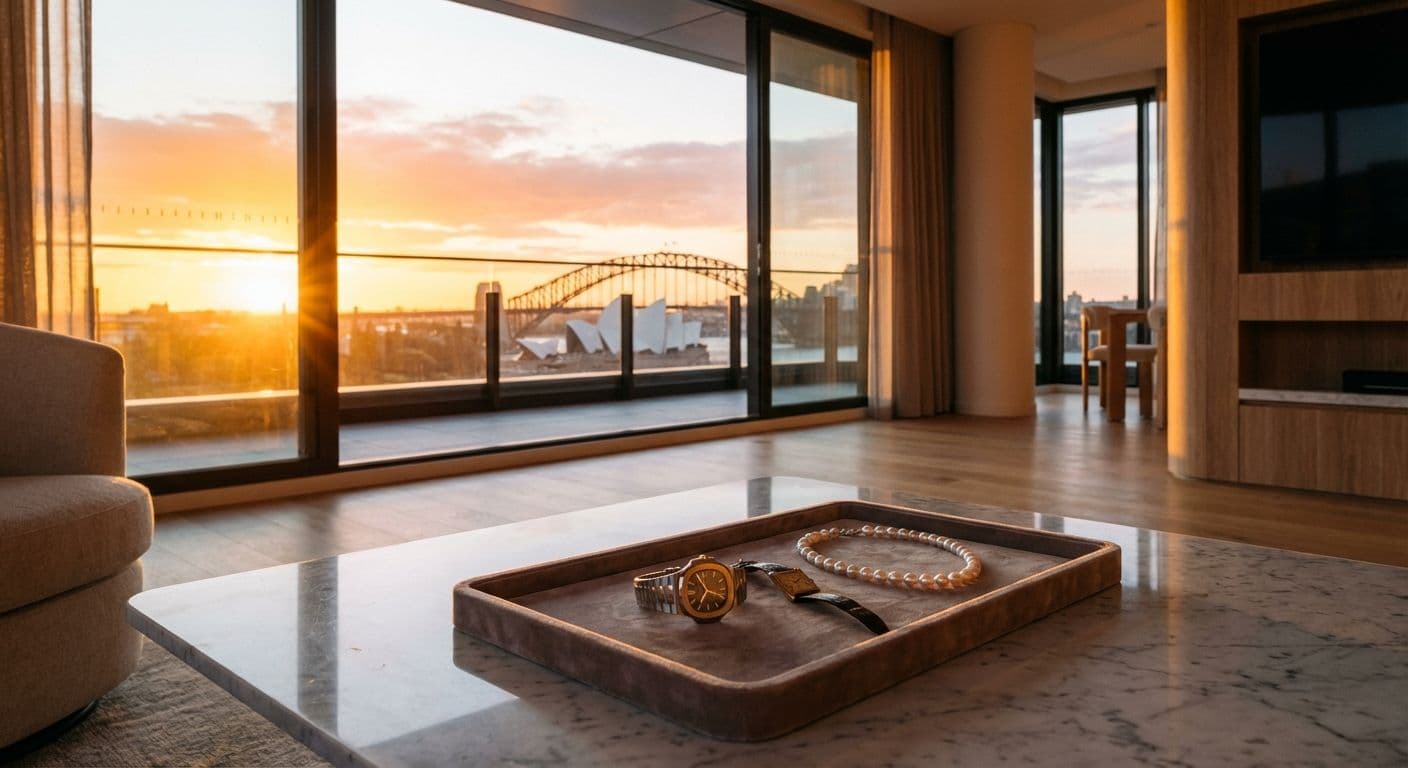
Wearable Wealth: Strategic Insurance for Rare Jewelry and Timepiece Collections

By Andre Lang · High-value home insurance specialist
Last updated 10 January 2026
In the current economic climate of 2026, the definition of an investment portfolio has shifted. High-net-worth individuals in Australia are increasingly looking toward 'wearable wealth'—rare timepieces, heritage jewelry, and investment-grade gemstones—as both a hedge against inflation and a portable store of value. However, as the secondary market for brands like Rolex, Patek Philippe, and bespoke Australian Argyle diamonds continues to show volatility and high demand, the strategy for protecting these assets must evolve beyond simple household insurance.
The 2026 Market: Why General Insurance Falls Short
For many Australian collectors, the first realization of under-insurance comes at the point of claim. Standard 'Home and Contents' policies are designed for mass-market consumer goods, not horological rarities or unique high-jewelry pieces. There are three primary pitfalls in general policies that collectors must navigate:
- Sub-Limits: Most general policies cap individual item payouts. If your policy has a $5,000 limit for jewelry and your watch is worth $50,000, you are self-insuring the remaining $45,000.
- Mysterious Disappearance Exclusions: Many standard policies require proof of theft (forced entry). Specialized policies cover 'mysterious disappearance' or accidental loss, which are the most common risks for wearable items.
- Replacement Clauses: General insurers often reserve the right to replace an item through their own 'preferred jewelers,' who may not have access to the specific vintage or limited-edition piece you lost.
Strategic Coverage Models: Agreed Value vs. Market Value
When structuring a specialized policy for a collection, the most critical decision is the valuation basis. In 2026, the distinction has never been more important due to the fluctuating price of gold and the scarcity of certain luxury watch models.
Agreed Value: The Gold Standard for Collectors
An Agreed Value policy is based on a professional appraisal submitted at the inception of the policy. In the event of a total loss, the insurer pays the exact amount listed on the schedule. This is preferred for rare assets because it removes the stress of negotiating the 'current value' with an adjuster during a claim.
Market Value: Flexibility vs. Uncertainty
Market Value policies (or Replacement Cost) aim to pay what the item would cost to buy new (or equivalent) today. While this sounds beneficial, it can be problematic for discontinued pieces where the 'market' price is subjective or vastly different from the original retail price. For the sophisticated collector, Agreed Value provides the most robust financial certainty.
The Appraisal Cycle: Maintaining Relevance in 2026
Values for luxury assets no longer remain static for five or ten years. The 'set and forget' mentality is the greatest threat to a collection's protection. In 2026, we recommend a 24-month appraisal cycle for the following reasons:
- Currency Fluctuations: For Australian collectors, the value of luxury goods—mostly priced in CHF or USD—shifts significantly with the AUD exchange rate.
- Secondary Market Surges: Specific timepiece models can see 20-30% price jumps in a single quarter due to social media trends or discontinuation announcements.
- Material Costs: The rising cost of platinum and gold affects the replacement value of bespoke jewelry, even if the gemstone value remains stable.
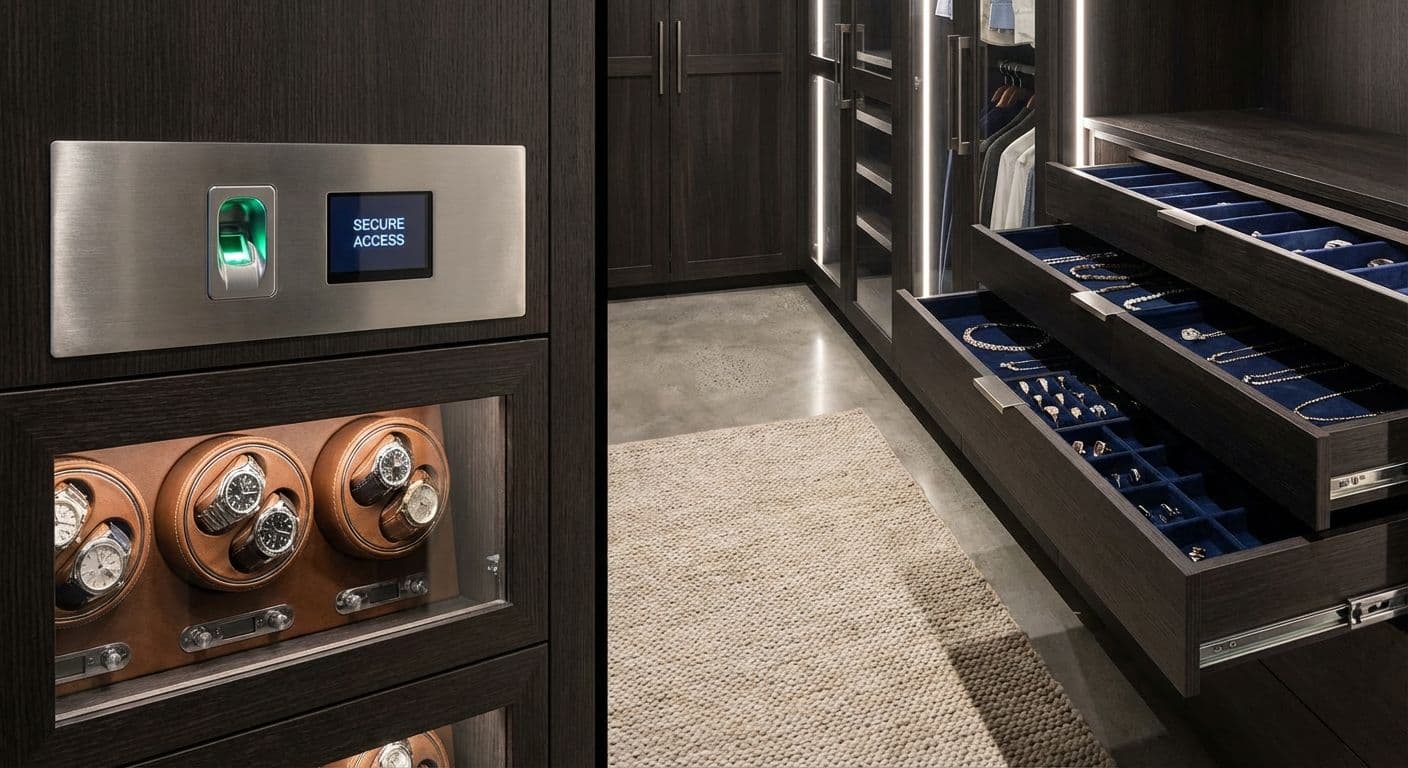
Global Lifestyle: Worldwide Transit Protection
One of the greatest appeals of jewelry and watches is their portability. However, travel is the highest-risk period for these assets. A strategic insurance policy should offer seamless worldwide coverage. Key considerations for the 2026 traveler include:
- In-Transit Security: Coverage should apply from the moment you leave your Australian residence, including while items are in airport security or hotel safes.
- Unattended Vehicle Exclusions: Most high-value policies will NOT cover items left in a car, even if locked in a glovebox or trunk. This is a common claim denial point.
- Hotel Safe Requirements: Some policies mandate that items not being worn must be stored in a hotel-provided safe with a specific security rating.
Risk Mitigation: The Collector’s Responsibility
Insurance is a transfer of risk, but insurers in 2026 are increasingly looking for 'proactive' clients. Implementing these security measures can often lead to premium discounts of 10-25%:
- Certified Home Safes: A safe should be professionally bolted to the floor and have an Australian 'Cash Rating' appropriate for the collection’s value.
- Monitored Alarm Systems: Systems linked to a 24/7 monitoring center provide significantly better protection than 'app-only' DIY cameras.
- Digital Inventories: Maintain a secure, cloud-based registry (like the WatchBox or specialized collector apps) containing high-resolution photos, serial numbers, and original purchase receipts.
Emerging Trends: Lab-Grown Diamonds and NFT Authentication
As we move further into 2026, two technological shifts are impacting insurance. First, the proliferation of high-quality lab-grown diamonds (LGDs) has created a bifurcation in the market. Insurers now require explicit disclosure of whether a stone is natural or lab-grown, as the replacement costs differ by as much as 80%.
Second, many luxury brands (such as Vacheron Constantin and Breitling) now issue digital 'passports' or NFTs to prove authenticity and ownership history. These digital assets are becoming a prerequisite for many insurers when underwriting 'Market Value' policies for high-end timepieces, as they virtually eliminate the risk of insuring a sophisticated counterfeit.
Navigating the Claims Process
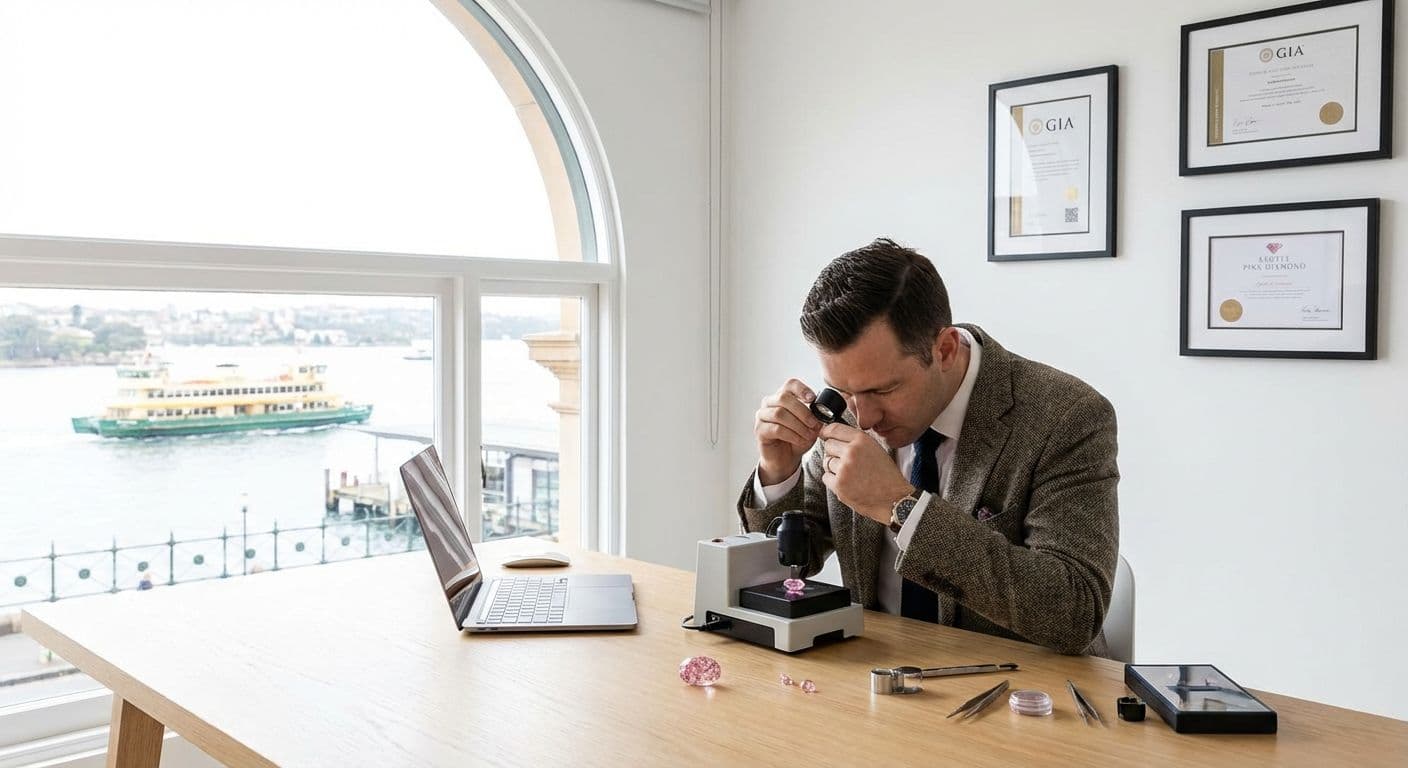
The true value of a strategic policy is revealed during a claim. For rare jewelry and watches, the process should be bespoke. A specialist insurer will typically offer:
- Cash Settlement Options: If a vintage piece is truly irreplaceable, you should have the right to a cash payout rather than a forced replacement with a 'similar' modern item.
- Choice of Repairer: For mechanical watches, this is non-negotiable. You must be able to send the piece to the manufacturer’s service center (e.g., Geneva or the brand’s Sydney atelier) to ensure original parts are used.
- Diminution in Value Coverage: If a rare watch is damaged and repaired, its market value may drop. Some high-end policies cover this 'loss of value' even if the item is physically restored.
Summary: Building a Resilient Portfolio
Insuring rare jewelry and timepieces in 2026 is no longer about a standard paper policy. It is a dynamic strategy involving regular appraisals, global transit considerations, and sophisticated physical security. By treating your collection as a serious asset class—comparable to fine art or real estate—you ensure that your 'wearable wealth' remains a legacy rather than a liability.
Frequently Asked Questions
Why is my standard home and contents policy insufficient for a luxury watch collection?
Standard policies typically have 'sub-limits' for valuables, often capped between $2,000 and $5,000 per item. High-value timepieces require 'scheduled' coverage or a standalone policy to ensure the full market value is covered without these restrictive caps.
How often should I have my jewelry appraised for insurance purposes?
In the volatile 2026 market, we recommend professional appraisals every 24 months. This ensures your 'sum insured' reflects current market prices, especially for assets like rare colored diamonds or discontinued luxury watches which can appreciate rapidly.
Does my insurance cover me while traveling overseas from Australia?
Specialized high-value policies usually offer 'worldwide cover' as standard, but standard home policies often restrict coverage once you leave your primary residence. Always verify that your policy includes 'accidental loss' and 'theft' while in transit globally.
What is the difference between 'Agreed Value' and 'Market Value' in jewelry insurance?
Agreed Value pays the exact amount stated on your policy schedule regardless of market shifts at the time of loss. Market Value pays the cost to replace the item at current prices. For rare, appreciating pieces, Agreed Value provides the most financial certainty.
Related insights
Explore our cover

Andre LangHigh-value home insurance specialist
Andre Lang is a high-value home insurance specialist who advises owners of architecturally significant and high-net-worth Australian homes on protecting their property, fine art, and collections.