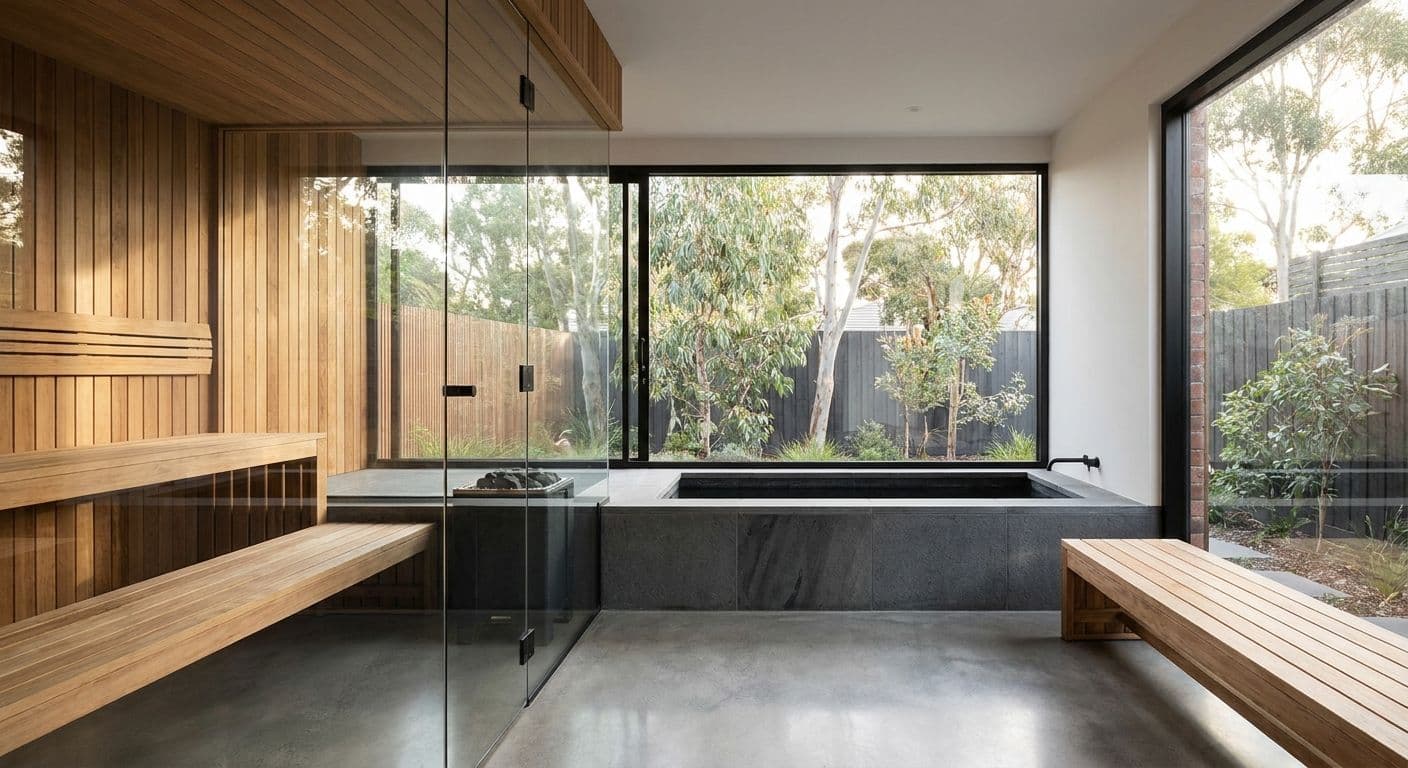
The Sanctuary Effect: Insuring Bespoke Wellness Suites and Private Spas

By Andre Lang · High-value home insurance specialist
Last updated 11 June 2026
The Australian luxury property market has undergone a fundamental shift. No longer is a home gym or a standard lap pool sufficient for the discerning homeowner. In 2026, the 'Sanctuary Effect' has taken hold, seeing the integration of professional-grade wellness suites directly into the master wing of premium residences. These spaces—comprising infrared saunas, steam rooms, cryotherapy chambers, and magnesium plunge pools—are more than just amenities; they are significant capital investments that require a sophisticated approach to risk management and insurance.
The Evolution of Residential Wellness in Australia
The demand for bespoke wellness suites in Australia has been driven by a desire for privacy and a holistic approach to longevity. From the coastal estates of Byron Bay to the refined penthouses of Melbourne, homeowners are commissioning spaces that rival world-class spas. These installations often involve imported materials, such as Italian travertine, Canadian red cedar, and Himalayan salt bricks, alongside complex engineering for ventilation and moisture control.
However, as these suites become more complex, the 'insurance gap' widens. Standard building insurance is often predicated on traditional construction methods and may not account for the specialised technology or the hyper-specific risks associated with high-heat and high-humidity environments. Protecting these assets requires an understanding of both the physical structure and the sophisticated machinery that powers the experience.
Identifying the Primary Risks
Insuring a private spa is not merely about covering the cost of the hardware; it is about anticipating the unique failure points inherent in wellness architecture. In 2026, insurers are focusing on three primary risk vectors:
- Water and Humidity Damage: Steam rooms and hydrotherapy pools require flawless waterproofing. A minor failure in a membrane can lead to structural rot, mould, and damage to adjacent rooms that may cost hundreds of thousands of dollars to rectify.
- Electrical and Fire Hazards: Traditional and infrared saunas operate at high temperatures for extended periods. Faulty wiring or the accidental placement of flammable materials near heaters are significant fire risks that require specific mitigation strategies.
- Specialist Equipment Breakdown: Cryotherapy chambers and advanced filtration systems are prone to mechanical failure. Without specific 'machinery breakdown' cover, a homeowner might find themselves personally liable for the replacement of a $50,000 unit.
Valuation Challenges for Bespoke Suites
One of the most common pitfalls in insuring a wellness suite is underinsurance. Standard calculators used by general insurers often fail to capture the artisan labour and specialised shipping costs associated with high-end wellness features. For instance, a bespoke steam room with hand-laid mosaic tiles and a custom-engineered ventilation system cannot be valued at the same rate as a standard bathroom renovation.
To ensure adequate protection, homeowners should seek an 'Agreed Value' policy rather than a 'Market Value' or standard 'Replacement' policy. This involves a professional valuation that accounts for the current costs of specialised materials and the niche tradespeople required to rebuild such a space. In the current Australian construction climate, where labour shortages for specialised trades are common, these costs can fluctuate significantly year-on-year.
The Role of Smart Technology in Risk Mitigation
In 2026, the intersection of smart home technology and insurance has become critical. For wellness suites, insurers are increasingly rewarding—or even requiring—the installation of IoT (Internet of Things) sensors to monitor the health of the sanctuary.
- Leak Detection: Smart sensors placed behind walls or near pumps can detect moisture at the micron level, automatically shutting off the water supply and alerting the homeowner before a leak becomes a catastrophe.
- Thermal Monitoring: Infrared cameras and thermal sensors can ensure that sauna heaters are not overheating or that they have been properly deactivated after use.
- Humidity Control: Automated HVAC systems that maintain optimal humidity levels prevent the growth of mould and the degradation of timber finishes, preserving the longevity of the suite and the validity of the insurance policy.
Liability and the 'Guest Factor'
While these spaces are designed for personal use, they are frequently shared with guests. This introduces a layer of public liability risk. If a guest slips on a wet surface in a steam room or experiences a health complication in a cryotherapy chamber, the homeowner's liability cover must be robust enough to handle potential claims.
Insurers will often look for evidence of 'due diligence,' such as non-slip flooring that meets Australian Standards, appropriate signage for temperature-controlled environments, and the presence of emergency shut-off buttons. Ensuring your wellness suite is 'built to code' is not just a safety requirement; it is a fundamental pillar of your insurance contract.
Maintenance Protocols for Insurance Compliance
Maintenance is often the deciding factor in whether a claim is paid or denied. For luxury wellness suites, insurers expect a level of care that exceeds standard home maintenance. Homeowners should maintain a 'Digital Logbook' of all professional services, including:
- Annual inspections of waterproofing membranes and sealants.
- Bi-annual servicing of steam generators and sauna heaters by certified technicians.
- Regular water chemistry testing for plunge pools and hydrotherapy tubs to prevent corrosive damage to pumps.
Selecting the Right Specialist Insurance
When insuring a bespoke wellness suite, the 'off-the-shelf' approach is rarely adequate. High-net-worth (HNW) insurance providers offer tailored policies that recognise these features as integral parts of a luxury lifestyle. These policies often include 'Loss of Use' coverage, which can compensate for the inability to use the facility during a lengthy repair process, or 'Trace and Access' cover, which pays for the cost of finding a leak—even if it involves tearing out expensive tiling.
In 2026, as home wellness technology continues to evolve, the key to successful asset protection lies in proactive engagement with your broker. By providing detailed specifications, photographs, and maintenance records, you can ensure that your private sanctuary remains a place of rejuvenation, free from the stress of financial vulnerability.
Future-Proofing Your Sanctuary
The Sanctuary Effect is set to deepen as more Australians prioritise health at home. Whether you are in the planning stages of a new build or looking to upgrade your current insurance coverage, the focus should always be on quality—both in construction and in the protection that surrounds it. A well-insured wellness suite is a testament to a life well-lived, ensuring that your investment in health is protected for years to come.
Frequently Asked Questions
Does standard home insurance cover my infrared sauna or steam room?
While many standard policies cover 'fixtures and fittings,' they often have sub-limits or exclusions regarding high-value machinery, water damage caused by steam, or specialised glass. For a bespoke suite, a high-net-worth policy is typically required to ensure full replacement value and coverage for mechanical breakdown.
How does a cold plunge pool affect my insurance premiums?
Like a traditional swimming pool, a cold plunge pool introduces liability risks and potential water damage risks. However, because they are often located indoors in wellness suites, insurers will look closely at your waterproof tanking and drainage systems. Professional installation and smart leak detection can help manage these premium costs.
What is 'Machinery Breakdown' cover and why do I need it for a wellness suite?
Wellness suites rely on complex pumps, heaters, and filtration systems. Standard home insurance usually covers damage from external events (like fire or storm), but not the internal mechanical or electrical failure of the equipment itself. Machinery breakdown cover ensures that if your $15,000 steam generator or cryotherapy motor fails, the repair or replacement is covered.
Are there specific maintenance requirements I must follow to stay insured?
Yes. Most specialist insurers require that bespoke wellness equipment be maintained according to the manufacturer’s specifications. In 2026, many insurers also look for the installation of smart sensors as a condition of coverage for high-value suites to mitigate the risk of undetected leaks or humidity damage.
Related insights
Explore our cover

Andre LangHigh-value home insurance specialist
Andre Lang is a high-value home insurance specialist who advises owners of architecturally significant and high-net-worth Australian homes on protecting their property, fine art, and collections.