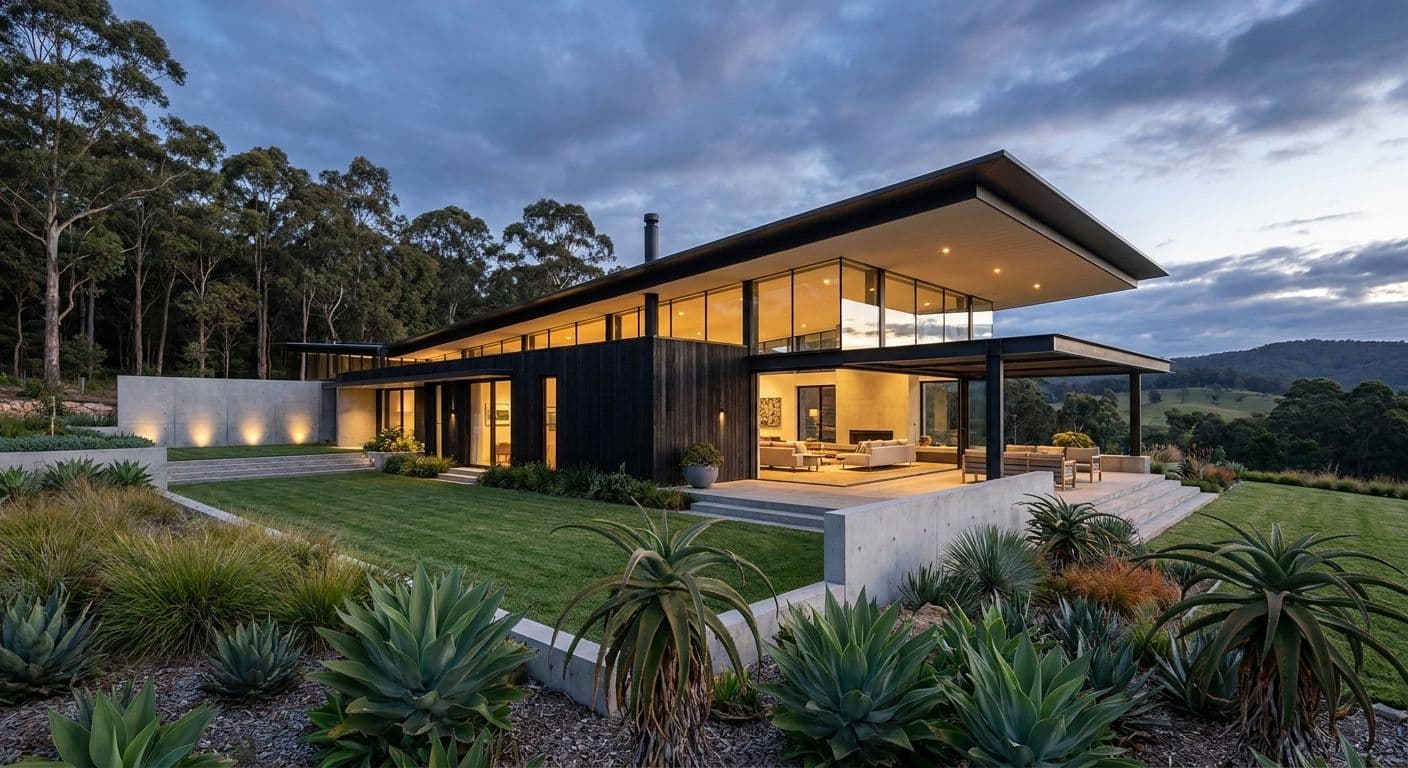
Elegance Under Fire: Design-Led Bushfire Resilience for High-Value Rural Estates

By Andre Lang · High-value home insurance specialist
Last updated 19 June 2026
The Australian landscape offers an unparalleled canvas for luxury living, yet for those establishing high-value estates in rural or bush-edge locations, nature presents a formidable challenge. In 2026, the conversation around rural architecture has shifted from 'defending against nature' to 'co-existing through intelligent design'. Elegance is no longer at odds with safety; rather, the most sophisticated properties today are those that weave bushfire resilience into their very DNA, ensuring that asset protection is as invisible as it is invincible.
The New Standard for Australian Rural Living
For the modern landowner, a rural estate is more than a residence; it is a significant capital investment and a legacy asset. Achieving bushfire resilience is no longer just about meeting minimum regulatory standards or building a 'bunker'. It is about a design-led approach where every architectural choice—from the orientation of the building to the chemical composition of the glazing—is calculated to mitigate risk while enhancing the living experience.
Navigating the BAL Spectrum Without Compromising Style
The Bushfire Attack Level (BAL) rating of a site determines the construction requirements needed to withstand potential ember attack, radiant heat, and direct flame contact. While a BAL-FZ (Flame Zone) rating used to imply a design of restricted windows and heavy concrete, 2026's architectural innovations have opened new possibilities.
- BAL-12.5 to BAL-29: Focuses on ember protection with high-quality mesh and non-combustible perimeter materials.
- BAL-40: Requires significant resistance to radiant heat. This is often where high-performance double-glazing and specialized cladding become essential.
- BAL-FZ: The highest level of risk. Historically challenging for luxury design, it now utilises advanced ceramic glass and automated radiant heat shields that retract into the building's structure.
Material Innovation: The Alchemy of Safety and Sophistication
The selection of materials is where the aesthetic of a high-value estate is defined. The goal is to choose materials that are inherently non-combustible but carry the textural richness expected in premium architecture.
High-Performance Concrete and Rammed Earth
Rammed earth provides a magnificent, tactile connection to the landscape. It is naturally fire-resistant and offers exceptional thermal mass. When paired with off-form concrete, it creates a sense of permanence and 'groundedness' that is highly sought after in contemporary Australian design. These materials do not burn, nor do they require the maintenance of traditional timber.
The Evolution of 'Fire-Safe' Timber
Timber is a staple of the Australian rural aesthetic. To maintain this look in high-risk zones, architects are turning to charred timber—a technique known as Shou Sugi Ban. This process creates a carbonised layer that is significantly more resistant to ignition. Alternatively, high-end aluminium cladding systems with photorealistic wood-grain finishes provide the warmth of timber with the fire rating of metal.
Defensible Beauty: Landscape Design as a Firebreak
The landscape of a luxury estate should be its first line of defence. Traditional bushfire planning often suggested clearing land, but modern design-led resilience uses the landscape to frame the home while creating a buffer.
- The Inner Circle: Within 10 to 30 metres of the home, the use of 'hydro-zones'—areas with high-moisture plants and manicured lawns—can significantly reduce radiant heat.
- Hardscaping as a Shield: Stone terraces, gravel pathways, and infinity-edge pools are not just luxury features; they are non-combustible breaks that prevent ground fires from reaching the structure.
- Species Selection: Favouring fire-retardant species like Creeping Boobialla or deciduous trees that have higher moisture content in their leaves.
The Intelligence of Defence: Smart Technology Integration
For high-value estates, protection must be proactive. Smart home technology has revolutionised how we manage fire risk. In 2026, an integrated system is a standard requirement for premium rural properties.
Automated external sprinkler systems can be triggered by infrared sensors that detect heat signatures long before embers reach the property. These systems are supported by dedicated onsite water storage—often concealed beneath tennis courts or within aesthetically designed water features—ensuring the home remains protected even if the mains water supply fails. Furthermore, remote monitoring allows estate owners to activate 'defence mode' via smartphone from anywhere in the world, closing motorised shutters and engaging pumps instantly.
Interior Integrity: Protection Beyond the Facade
A design-led approach extends to the interior. High-value estates often house significant art collections, bespoke furniture, and high-end finishes. Protecting these assets requires more than just stopping the fire from entering; it requires managing the internal environment.
Internal misting systems are a discreet alternative to traditional sprinklers, using far less water and causing minimal damage to luxury finishes while effectively suppressing heat and smoke. Additionally, the use of fire-rated internal wall systems and the strategic placement of 'safe rooms' provide an ultimate layer of security for both property and person.
Risk Management and Asset Valuation
From an investment perspective, design-led bushfire resilience is a critical component of risk management. Insurance providers are increasingly scrutinising the 'resilience profile' of high-value assets. A home that exceeds BAL requirements through intelligent engineering and landscape management is far more likely to secure favourable premiums and maintain its market value during periods of climate volatility.
Ultimately, the most successful rural estates are those where the architecture speaks of elegance and the engineering speaks of endurance. By prioritising resilience during the design phase, owners can enjoy the beauty of the Australian bush with the confidence that their lifestyle and their legacy are protected against the elements.
Frequently Asked Questions
Does a high BAL rating mean I cannot use timber in my design?
Not necessarily. While BAL-FZ (Flame Zone) requires non-combustible materials, lower ratings allow for fire-retardant treated timbers or specific hardwoods like Spotted Gum and Blackbutt. For high-end aesthetics, many architects now use Shou Sugi Ban (charred timber) or non-combustible aluminium cladding that mimics wood grain perfectly.
Can floor-to-ceiling glass still be used in bushfire-prone areas?
Yes, but it requires specialized engineering. For BAL-40 and BAL-FZ, you must use toughened glass with fire-rated frames, and in many cases, integrated motorised bushfire shutters. These shutters can be recessed into the facade so they are invisible when not in use, preserving your views and design integrity.
How does bushfire-resilient design affect property value?
In 2026, bushfire resilience is a significant value-add for rural estates. Sophisticated buyers seek 'future-proof' homes. A design-led resilient home not only ensures lower insurance premiums but also provides the security and peace of mind that are essential for high-net-worth asset protection.
What is a 'defensible space' in luxury landscaping?
It is an area around the home where vegetation is managed to reduce the intensity of an approaching fire. In a luxury context, this is achieved through 'green breaks'—using lush, moisture-rich lawns, stone courtyards, swimming pools, and fire-resistant plant species that enhance the estate's beauty while acting as a barrier.
Related insights
Explore our cover

Andre LangHigh-value home insurance specialist
Andre Lang is a high-value home insurance specialist who advises owners of architecturally significant and high-net-worth Australian homes on protecting their property, fine art, and collections.