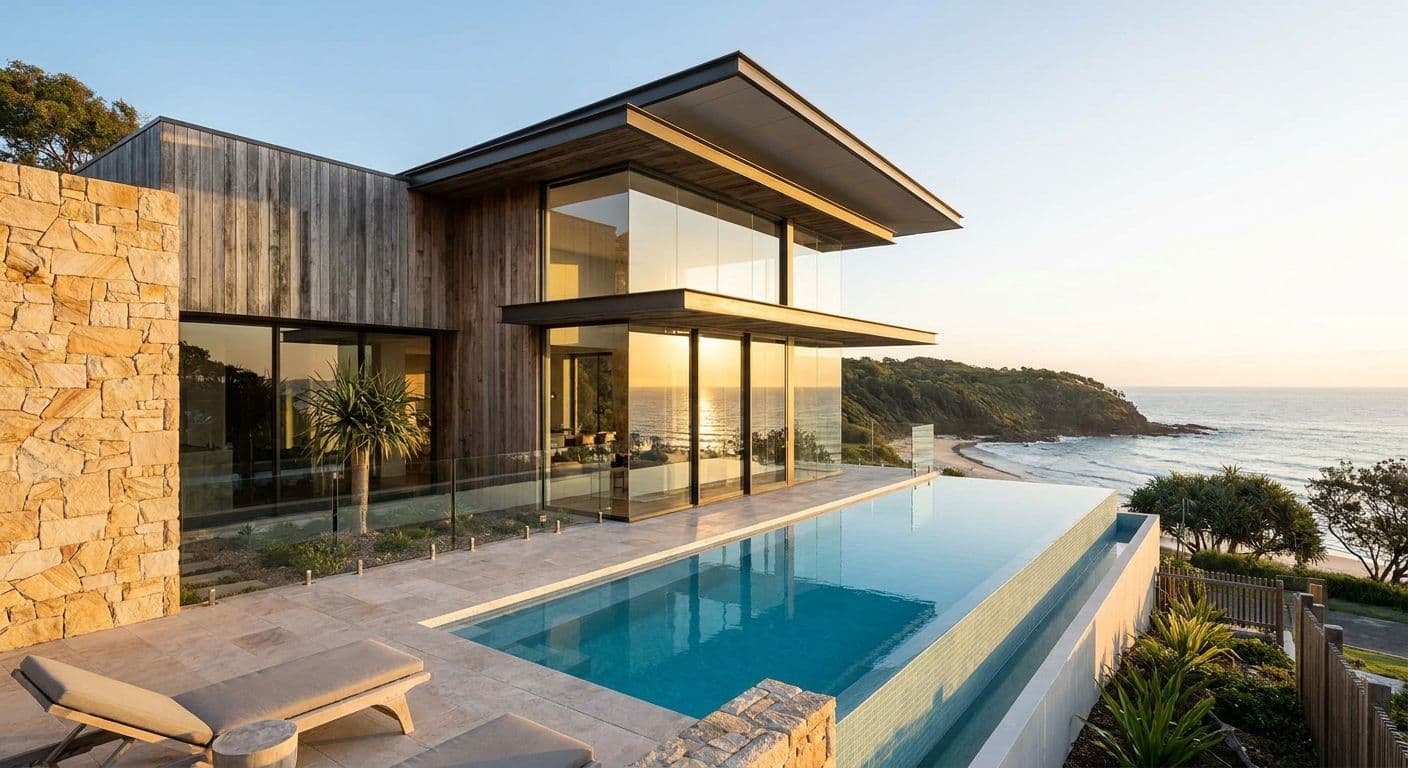
Beyond the Stay: Navigating Risk for High-End Short-Term Holiday Rentals

By Andre Lang · High-value home insurance specialist
Last updated 9 July 2026
The Australian luxury short-term rental market has undergone a significant transformation. What was once a niche segment for coastal retreats has evolved into a sophisticated asset class, with high-net-worth travellers seeking more than just a place to sleep; they are seeking curated experiences. As we move through 2026, the complexity of managing these properties has intensified. For owners of premium holiday rentals in locations like Byron Bay, the Mornington Peninsula, or Sydney’s Northern Beaches, the financial stakes are higher than ever.
Navigating the risks associated with high-end rentals requires a departure from traditional property management. When a property is valued in the millions, a standard 'off-the-shelf' insurance policy is rarely sufficient. Protecting these assets involves a comprehensive understanding of physical security, liability exposure, and the nuances of specialised coverage that addresses the specific needs of the luxury market.
The Shift in the 2026 Australian Rental Landscape
In 2026, regulatory scrutiny and guest expectations have converged. Local councils across Australia have introduced stricter compliance measures for short-term holiday rentals (STHR), often requiring higher standards of safety equipment and noise management. Simultaneously, the 'ultra-luxe' guest expects seamless technology, bespoke interiors, and absolute privacy.
This evolution creates a dual-layered risk profile. On one hand, there is the increased probability of accidental damage to high-value finishes; on the other, there is the heightened legal risk of non-compliance with shifting local laws. A failure to adapt to this landscape can result in more than just a repair bill—it can lead to significant legal liabilities and the loss of your operating license.
Safeguarding the Physical Asset: The $3M Rebuild Reality
The core of your investment is the physical structure. For luxury homes, the cost of rebuilding is often far higher than the market value suggests. Architecturally designed homes utilise bespoke materials—imported marble, custom joinery, and specialised glazing—that require expert craftsmanship to replace. In the current Australian construction climate, labour shortages and material inflation have pushed the rebuild cost of many premium residences well beyond the $3 million mark.
Standard policies often underestimate these costs, leading to 'underinsurance.' If a total loss occurs, being underinsured can be financially devastating. It is critical to secure high-value home insurance that accounts for the true cost of architectural reproduction and period-accurate restoration.
Common Physical Risks in Luxury Rentals
- Accidental damage to high-end flooring (e.g., red wine on rare marble or custom parquetry).
- Failure of complex home automation and HVAC systems due to guest misuse.
- Environmental damage in coastal regions, including salt spray corrosion and high-wind impact.
- Malicious damage or 'party' scenarios that exceed traditional security bond amounts.
Protecting Curated Interiors and Collections
What sets a high-end rental apart is its interior design. Many owners furnish these properties with designer furniture, original artworks, and high-end tech to command premium nightly rates. However, leaving a $50,000 sculpture or a collection of Australian landscape paintings in a rental environment introduces substantial risk.
Traditional home contents insurance often has low limits for individual items or excludes them entirely if the home is used for commercial holiday letting. If your property features significant works, you must consider fine art insurance that specifically permits the property to be used as a short-term rental. This ensures that even if a guest accidentally damages a curated piece, your financial interest is fully protected.
Liability and the 'Duty of Care' in 2026
In the luxury sector, guests often have higher expectations and, occasionally, higher litigious tendencies. As a property owner, you have a stringent 'duty of care' to ensure the premises are safe. From the slip resistance of poolside tiles to the structural integrity of balconies, any oversight can lead to a multi-million dollar liability claim.
Public liability insurance for a short-term rental is non-negotiable. However, it must be specifically rated for commercial use. If a guest is injured while staying at your property and it is discovered that you are running a business under a personal home policy, the insurer may decline the claim, leaving you personally liable for legal costs and damages.
Mitigating Liability Through Management
- Professional Audits: Regular safety audits by qualified professionals to identify potential hazards.
- Digital Documentation: Maintain a clear digital trail of maintenance logs, from pool servicing to smoke alarm testing.
- Clear Disclosures: Ensure guest manuals clearly outline the safe operation of amenities like fireplaces, saunas, or gym equipment.
Technology as a Shield: Smart Solutions for Risk Management
In 2026, technology is the primary tool for proactive risk management. For high-end owners, 'set and forget' is no longer an option. Smart home ecosystems allow owners and managers to monitor properties without infringing on guest privacy.
Noise monitoring devices (such as Minut or NoiseAware) are now standard in premium rentals. These devices alert managers if decibel levels exceed a certain threshold for a sustained period, allowing for intervention before a 'party' escalates or neighbours complain. Similarly, water leak sensors and temperature monitors for wine cellars can prevent catastrophic losses before they occur.
Business Continuity: Beyond Physical Damage
For many investors, a luxury holiday rental is a significant revenue stream. If the property becomes uninhabitable due to a fire, flood, or even a localized burst pipe, the loss of income can be substantial—especially if it occurs during peak seasons like December or January.
Comprehensive luxury home insurance should include 'Loss of Rent' or 'Business Interruption' cover. This ensures that while the property is being repaired, you are compensated for the income you would have earned based on your historical booking data. In the high-end market, where a single week can command $20,000 or more, this coverage is essential for financial stability.
The Importance of Specialist Brokerage
The Australian insurance market is currently hardening, meaning insurers are becoming more selective about the risks they take on. Short-term rentals are often viewed as high-risk by generalist insurers. Working with a specialist broker who understands the luxury market ensures that you are not just 'buying a policy' but 'buying a promise' that the cover will hold up under the unique pressures of the holiday rental industry.
A specialist can tailor a policy to include bespoke features such as cover for 'identity theft' of the property (to prevent fraudulent bookings) or 'evacuation cover' in fire-prone regions. They can also ensure that the definitions within the policy align with the modern reality of high-end hospitality.
Conclusion: A Comprehensive Approach to Peace of Mind
Operating a high-end short-term rental in Australia is a rewarding but complex endeavour. As the market continues to professionalise in 2026, the gap between 'adequate' and 'excellent' risk management is widening. By focusing on accurate asset valuation, robust liability protection, and the strategic use of technology, owners can protect their investments and focus on what they do best: delivering world-class guest experiences.
Ultimately, the goal of risk management is not just to prevent loss, but to provide the freedom to operate with confidence. In the world of luxury, where reputation and asset integrity are everything, having the right protection in place is the ultimate competitive advantage.
Frequently Asked Questions
Does standard home insurance cover short-term holiday rentals?
Typically, no. Most standard Australian home insurance policies have exclusions for commercial use or short-term letting. For high-value properties, it is essential to have a policy specifically designed to cover the unique risks of the luxury rental market.
What is the 'replacement value' for high-end properties in 2026?
Replacement value refers to the cost of rebuilding your property to its exact original standard using modern labour and material costs. Given the rising cost of architectural materials and specialised trades in Australia, this often exceeds $3 million for luxury homes.
How can I mitigate the risk of guest damage in a luxury rental?
Effective mitigation involves a combination of strict guest vetting, high-security deposits, professional property management, and the installation of smart home monitoring systems for noise and occupancy.
What level of public liability insurance is recommended for luxury rentals?
For high-end properties, a minimum of $20 million in public liability insurance is standard in the Australian market to protect against significant personal injury claims or legal costs.
Related insights
Explore our cover

Andre LangHigh-value home insurance specialist
Andre Lang is a high-value home insurance specialist who advises owners of architecturally significant and high-net-worth Australian homes on protecting their property, fine art, and collections.