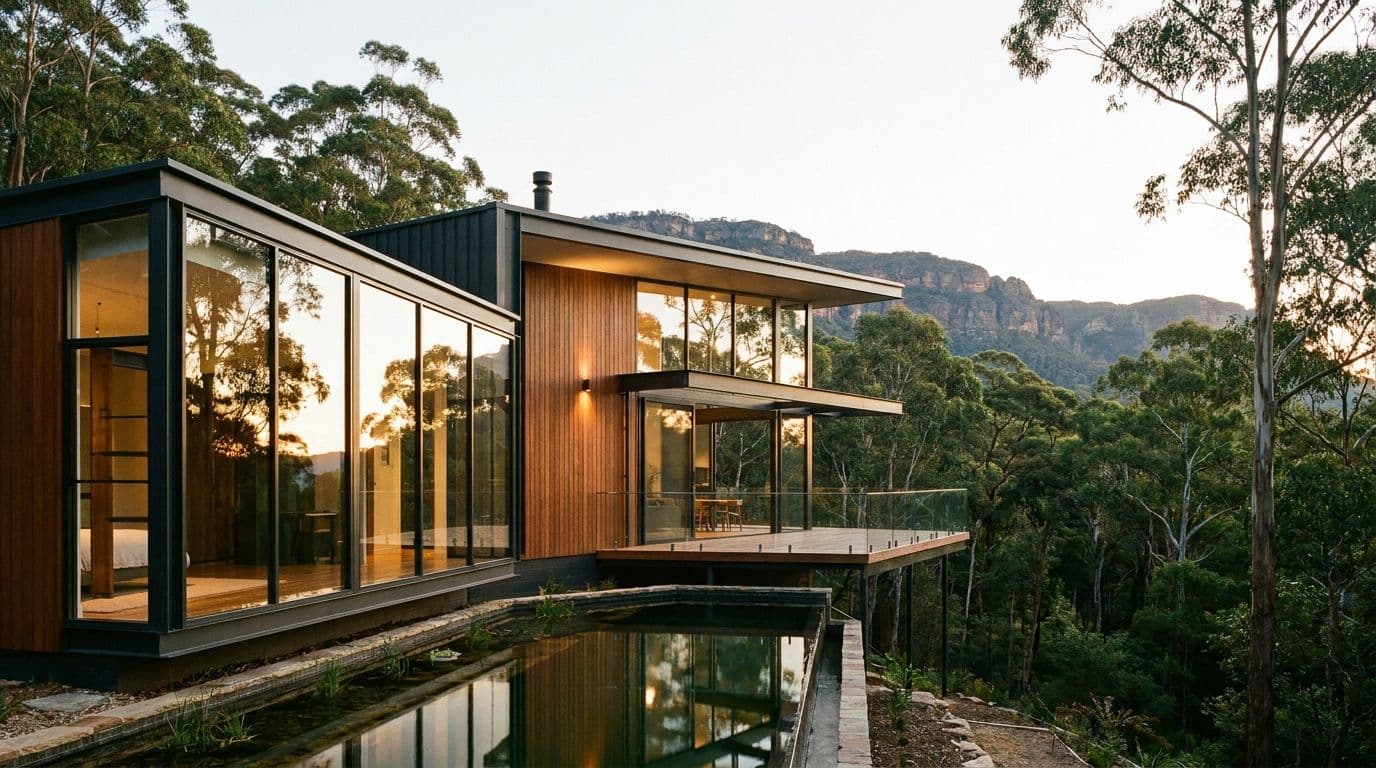
Fire-Resistant Elegance: Marrying BAL-40 Compliance with Premium Architectural Design

By Andre Lang · High-value home insurance specialist
Last updated 10 May 2026
For the discerning homeowner in Australia, the dream of a bushland retreat or a coastal sanctuary often comes with a significant regulatory caveat: the Bushfire Attack Level (BAL) rating. In the past, achieving BAL-40 compliance—the second-highest level of bushfire risk assessment—meant compromising on aesthetics, often resulting in heavy, fortress-like structures that felt disconnected from their environment. However, as we move through 2026, a new era of 'Fire-Resistant Elegance' has emerged. Leading architects and builders are now demonstrating that rigorous safety standards and premium architectural design are no longer mutually exclusive.
This evolution is driven by material innovation and a sophisticated understanding of fire dynamics. By integrating resilient features at the conceptual stage, a luxury asset can be protected against extreme radiant heat and ember attack while maintaining the open-plan, light-filled grandeur expected of high-end Australian architecture.
Defining the BAL-40 Standard in Modern Architecture
The BAL-40 rating signifies that a building must be able to withstand a radiant heat flux of up to 40kW/m² and have increased protection against ember attack and potential flame contact. In the Australian Standard AS 3959:2018, this is a substantial jump from lower categories, necessitating non-combustible materials for almost all external surfaces.
To achieve compliance without losing architectural integrity, designers focus on three primary threat vectors:
- Ember Attack: The most common cause of house loss, where burning debris enters gaps in the building envelope.
- Radiant Heat: Intense energy that can shatter standard glass and ignite combustible materials from a distance.
- Flame Contact: Direct impingement from moving fire fronts or ignited adjacent vegetation.
Material Innovation: High-Performance Cladding and Finishes
The palette for a BAL-40 home has expanded remarkably. We are no longer limited to basic brick or corrugated iron. Modern luxury builds now utilise ultra-high-performance concrete (UHPC), volcanic stone cladding, and advanced fibre-cement systems that mimic the texture of natural materials.
One of the most significant breakthroughs for 2026 is the use of timber-sublimated aluminium. These products provide the warmth and grain of spotted gum or blackbutt—iconic Australian hardwoods—while being entirely non-combustible. This allows architects to design extensive soffits, screens, and feature walls that satisfy fire authorities while meeting the highest aesthetic standards. Furthermore, these materials offer superior longevity and resistance to the harsh Australian sun, ensuring the property remains a premium asset with minimal maintenance.
The Glazing Dilemma: Maximising Views While Ensuring Safety
In luxury residential design, the connection between the interior and the landscape is paramount. Traditionally, BAL-40 required heavy external shutters or fire-grade steel mesh screens that obscured views and hindered the 'indoor-outdoor' flow. Today, the focus has shifted to the glazing system itself.
Architectural glazing for BAL-40 zones now utilizes 6mm (or thicker) toughened glass, often in double-glazed configurations with argon-filled cavities for thermal efficiency. The frames are equally critical; high-grade powder-coated aluminium with thermal breaks or stainless steel systems are the industry standard. These systems are tested to withstand the intense 40kW/m² heat pulse without failing, allowing for expansive floor-to-ceiling windows that capture breathtaking Australian vistas without the need for unsightly secondary barriers.
Integrating Smart Technology and Active Fire Systems
While BAL-40 primarily addresses passive design (the building's fabric), luxury homes in 2026 often integrate active systems to provide an additional layer of security and asset protection. This 'defence-in-depth' strategy is highly regarded by risk management specialists and insurers alike.
Smart-home automation can now link smoke and heat sensors directly to architectural features. In the event of a fire threat, the home can autonomously:
- Deploy concealed fire-rated shutters hidden within the wall cavity.
- Activate external ember-protection misting systems.
- Close all automated vents and dampers to seal the building envelope.
- Switch HVAC systems to internal recirculation mode to prevent smoke ingress.
Strategic Landscaping: The Soft Approach to Bushfire Defence
A BAL-40 home does not sit in isolation; its surrounding environment is the first line of defence. Modern landscape architecture for fire-prone areas has moved away from 'clearing everything' toward 'intelligent curation'. By selecting fire-retardant species with high moisture content—such as certain succulents, deciduous trees, and specific Australian natives like the Saltbush—designers can create a lush, beautiful 'inner protection zone'.
Hardscaping also plays a dual role. Stone gabion walls, infinity-edge pools, and wide gravel paths serve as elegant design features while simultaneously acting as critical fuel breaks. This holistic approach ensures the property is not only safe but also retains the high-end 'curb appeal' that defines a luxury asset.
Investment Longevity and Asset Protection
From a risk management perspective, building to BAL-40 standards is an exercise in future-proofing. As climate patterns shift, areas previously considered low-risk may see their BAL ratings upgraded. By proactively adopting high-level compliance through premium design, homeowners protect their capital investment from both environmental threats and regulatory obsolescence.
Furthermore, the transparency of this protection is vital. A home that looks like a masterpiece but possesses the resilience of a bunker is a far more attractive proposition for the secondary market. It offers the buyer peace of mind without the 'compliance tax' of poor aesthetics.
Conclusion: A New Standard for Australian Living
The marriage of BAL-40 compliance and premium architectural design represents the pinnacle of modern Australian residential construction. It is an acknowledgment that we can live in harmony with our beautiful but volatile landscape by using intelligence, innovation, and uncompromising quality. By choosing the right materials, embracing smart technology, and working with architects who understand the nuance of fire-resistant elegance, homeowners can create sanctuaries that are as safe as they are stunning.
Frequently Asked Questions
Can I use natural timber in a BAL-40 zone?
While traditional softwoods and many hardwoods are prohibited for external use in BAL-40 zones, specific 'bushfire-resisting' timbers (like Ironbark or Merbau) may be used under strict conditions for certain elements. However, for 2026 luxury builds, most architects prefer high-performance non-combustible composites or aluminium cladding with timber-sublimation finishes to ensure total compliance and lower maintenance.
Does BAL-40 compliance mean I can't have large windows?
Not at all. Modern engineering allows for expansive glazing even in BAL-40 zones. This typically requires 6mm or thicker toughened glass and specialized non-combustible frames (usually aluminium or steel). The key is the system's ability to withstand radiant heat of 40kW/m², which high-end architectural glazing systems are designed to do.
How does BAL-40 affect my home insurance premiums?
Building to or exceeding BAL-40 standards is a significant risk management strategy. Insurers increasingly look at resilience measures when calculating premiums in bushfire-prone areas. A home that integrates these features seamlessly is often viewed as a lower risk, potentially aiding in securing comprehensive cover in high-risk postcodes.
Related insights
Stone, Timber, and Terrazzo: The True Cost of Replacing Premium Finishes
Discreet Defence: Integrating Physical Security into Luxury Residential Architecture
The Gourmet Heart: Protecting Professional-Grade Kitchens and Culinary Assets
Explore our cover

Andre LangHigh-value home insurance specialist
Andre Lang is a high-value home insurance specialist who advises owners of architecturally significant and high-net-worth Australian homes on protecting their property, fine art, and collections.