The Executive Study: Insuring the High-Value Home Office Revolution

By Andre Lang · High-value home insurance specialist
Last updated 29 June 2026
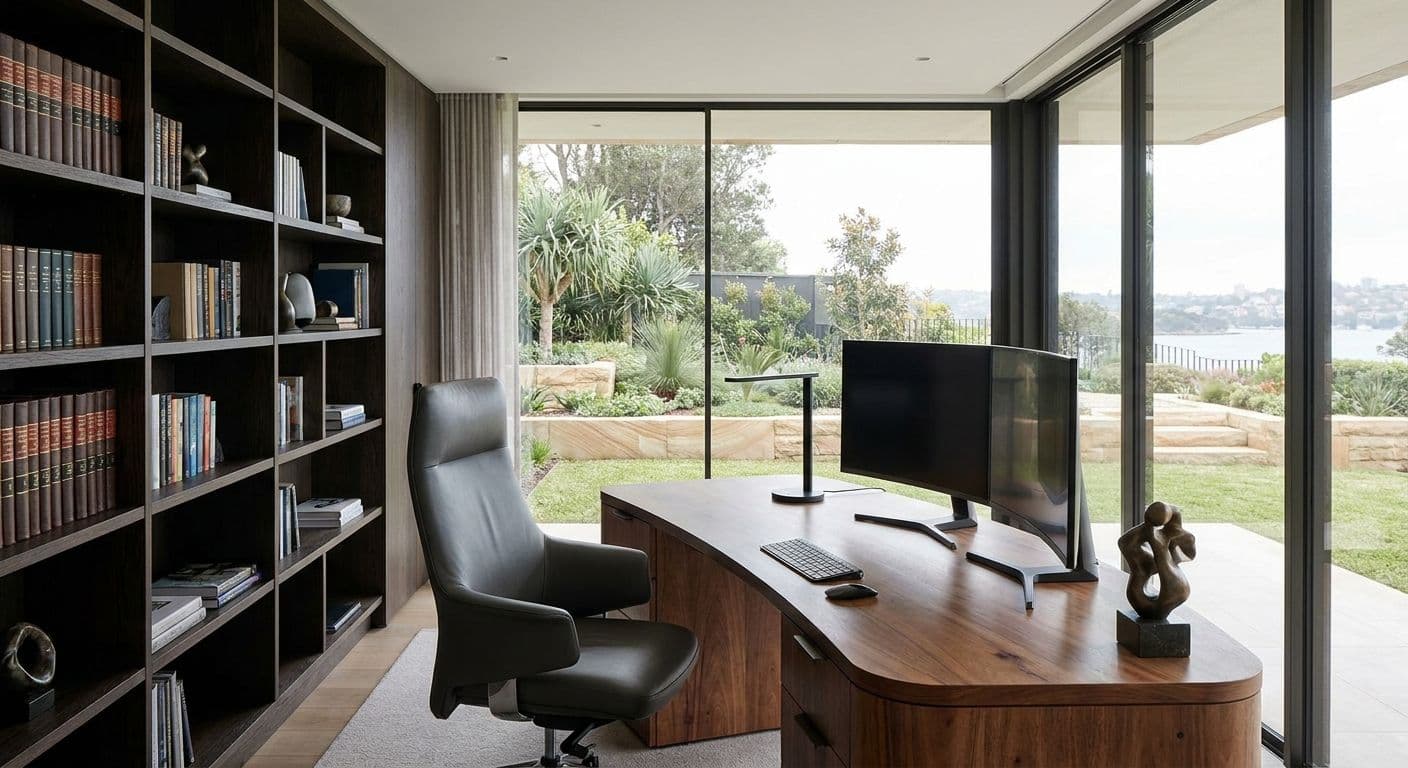
The landscape of the Australian professional environment has undergone a permanent metamorphosis. What began as a temporary shift toward remote work has matured into a sophisticated 'home office revolution,' where the executive study is no longer a converted spare bedroom but a high-value command centre. In 2026, the modern executive study represents a significant concentration of an individual's wealth, blending bespoke interior design with cutting-edge technology and sensitive professional data.
However, this increase in the value and utility of the home office has created a critical gap in traditional insurance. Many high-net-worth individuals remain vulnerable because their high-value home insurance has not been updated to reflect the specialised nature of their professional sanctuary. Protecting these spaces requires a nuanced understanding of asset valuation, risk management, and the unique intersections of professional and personal life.
The Anatomy of the 2026 Executive Study
To understand the insurance requirements, one must first recognise the sheer scale of investment in modern executive studies. A premium home office in suburbs like Toorak, Mosman, or Peppermint Grove often rivals the main living areas in terms of rebuild cost and contents value. Key elements often include:
- Bespoke Joinery: Custom-built libraries, hidden storage, and integrated desks crafted from premium Australian hardwoods or imported marbles.
- Professional-Grade Technology: Multi-monitor arrays, high-speed servers, dedicated fibre-optic lines, and advanced videoconferencing suites.
- Acoustic Engineering: Soundproofing of walls and ceilings, and the installation of acoustic panels to ensure privacy and professional audio quality.
- Climate Control: Dedicated HVAC systems to protect sensitive electronics and rare book collections from Australia’s varied climate.
Each of these elements introduces a different layer of risk. A standard policy might cover the physical desk, but it may fail to account for the professional installation costs of high-end acoustic treatments or the niche software required to run an executive’s digital ecosystem.
Why Standard Policies Fail the High-Value Office
The most significant pitfall for executives is the 'business use' exclusion or limitation found in many off-the-shelf insurance products. These policies are designed for domestic use; once a space is utilised for professional purposes, the insurer may cap the coverage for equipment or, in some cases, deny a claim entirely if the business activity wasn't disclosed.
Moreover, the replacement of high-end equipment requires more than just a cheque for the purchase price. It requires a policy that understands the need for rapid replacement to maintain business continuity. If a primary workstation is damaged by a fire or flood, an executive cannot afford to wait weeks for a standard claims process to resolve. Premium coverage often includes 'agreed value' for equipment and expedited replacement services.
Protecting the Intangibles: Fine Art and Digital Assets
An executive study is often a showcase for personal taste and investment. It is common to find significant artworks or rare collectibles curated within these spaces. These items are not mere 'contents'; they are appreciating assets that require specific protection. It is essential to integrate fine art insurance into the broader home office strategy to cover risks like accidental damage or specialized restoration.
Furthermore, the digital revolution has moved the corporate 'server room' into the residential study. Cyber-security is now a paramount risk management concern. While the corporate office may have a robust IT defence, the home office is often the 'weak link' targeted by hackers. High-value home insurance policies in 2026 are increasingly offering cyber-extortion and data recovery modules, acknowledging that the loss of digital professional assets can be more devastating than the loss of physical ones.
Risk Management: Beyond the Policy
Insuring a high-value home office is as much about prevention as it is about protection. To secure the most favourable terms and ensure total safety, executives should implement the following risk management strategies:
- Redundant Power Systems: Investment in high-quality surge protection and Uninterruptible Power Supplies (UPS) to protect sensitive hardware from Australia's occasional grid instability.
- Enhanced Physical Security: Biometric locks for the study door and high-resolution internal cameras that integrate with the home’s central security system.
- Document Digitisation and Fire-Proofing: Even in a digital world, physical contracts and deeds often reside in the home office. These should be stored in fire-rated safes and digitised to secure cloud storage.
The Importance of Regular Valuations
Inflation and the rising cost of specialised labour in Australia mean that the cost of replacing bespoke interiors is constantly climbing. A valuation from 2023 is likely insufficient in 2026. We recommend an annual review of your home office assets, particularly after any technological upgrades or interior redesigns. This ensures that the 'sum insured' remains accurate, preventing the dreaded 'averaging' clause where an insurer reduces a payout because the property was underinsured.
The Future of the Executive Workspace
As we look further into 2026 and beyond, we anticipate the integration of AI-driven home management and even more advanced immersive technologies like VR boardrooms. These advancements will only increase the value held within the home office walls. Transitioning to a high-value insurance model is no longer a luxury—it is a pragmatic necessity for the modern Australian leader.
Ultimately, the goal of insuring an executive study is to provide peace of mind. When your professional and personal worlds collide in such a high-value space, you need the certainty that your environment is protected by a policy that is as sophisticated as the work you do within it.
Frequently Asked Questions
Does my standard home insurance cover my professional equipment?
Most standard policies have low sub-limits for 'business tools' or 'home office equipment,' often capped at $5,000 to $10,000. For an executive study with high-end tech, this is significantly insufficient, necessitating a high-value policy that recognises professional-grade assets.
Are structural renovations for a home office covered under existing policies?
Significant structural changes, such as adding soundproofing, bespoke cabinetry, or separate entrances for clients, must be disclosed to your insurer. Failure to update your sum insured to reflect these improvements can leave you underinsured in the event of a total loss.
How do I value bespoke office furniture for insurance purposes?
Bespoke or designer furniture should be insured on a 'replacement value' basis. We recommend keeping original invoices and obtaining periodic valuations from specialist furniture appraisers to ensure your coverage reflects the true cost of commissioning identical pieces today.
Does high-value home insurance include cyber protection for my home office?
Many premium policies now offer optional or integrated cyber modules. These can cover data recovery, identity theft, and even extortion attempts, which is critical for executives handling sensitive corporate information from a home network.
Related insights
Explore our cover

Andre LangHigh-value home insurance specialist
Andre Lang is a high-value home insurance specialist who advises owners of architecturally significant and high-net-worth Australian homes on protecting their property, fine art, and collections.