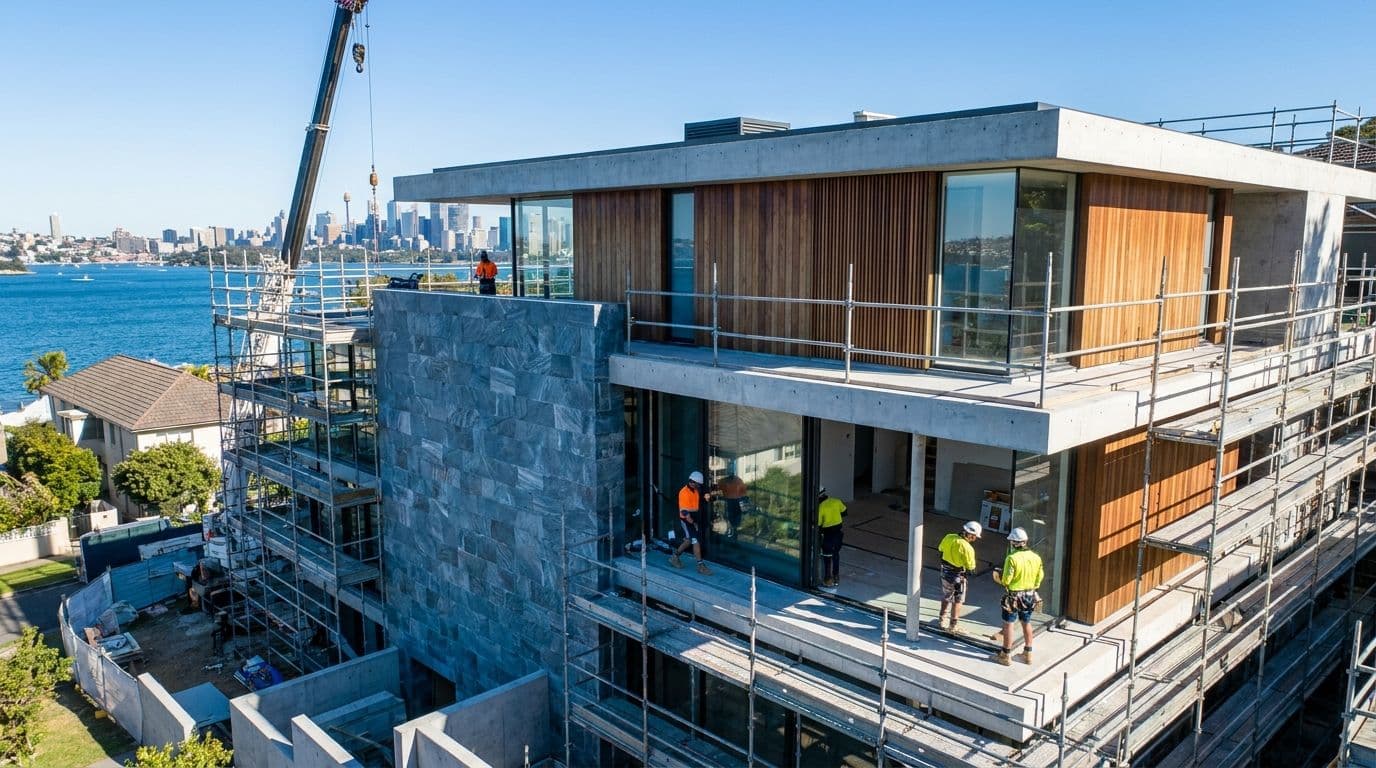
The Renovation Gap: Managing Risk During Substantial High-End Home Improvements

By Andre Lang · High-value home insurance specialist
Last updated 14 May 2026
For owners of luxury Australian real estate, a major renovation is more than a simple aesthetic upgrade; it is a complex infrastructure project involving significant capital and logistical risk. However, many homeowners fall into what industry experts call 'The Renovation Gap'. This occurs when a standard high-value home insurance policy ceases to provide adequate protection due to the scale of the works, yet the owner assumes they are fully covered. In 2026, as construction costs and material lead times remain volatile, managing this gap has become the most critical component of luxury asset protection.
Defining the Renovation Gap in 2026
The renovation gap is the void between your existing home and contents insurance and the risks introduced by a building site. Most standard premium policies contain strict exclusions for 'substantial' renovations. In the Australian market, if you are altering the structure of the home, extending the footprint, or if the project cost exceeds a specific threshold (often as low as $50,000), your policy may be automatically suspended or restricted.
This leaves the homeowner exposed to several catastrophic scenarios: fire during construction, structural collapse, theft of high-end materials, or third-party liability claims. Without the correct insurance architecture, a multi-million dollar asset could be left entirely unprotected at its most vulnerable stage.
Why Standard Policies Fail During Construction
Standard insurers are in the business of covering 'static' risks. A renovation transforms a home into a dynamic, high-risk environment. There are three primary reasons why your existing policy will likely fail you during a major high-end improvement project:
- The Unoccupancy Clause: Most Australian policies lapse if the property is vacant for more than 60 days. High-end renovations often require owners to vacate for 12 months or more.
- Structural Alteration Exclusions: Standard policies often exclude any damage caused by, or arising from, structural works (e.g., removing a load-bearing wall or adding a second storey).
- Duty of Disclosure: Failing to notify your insurer about the commencement of works can lead to a total denial of claims, even for events unrelated to the renovation, such as a storm.
Contract Works Insurance: The Primary Defence
To close the gap, homeowners must engage with Contract Works Insurance (also known as Construction All Risks). In 2026, the trend for high-net-worth individuals (HNWIs) in Australia is moving toward 'Principal Arranged Insurance' (PAI). While traditionally the builder organises the insurance, PAI allows the homeowner to take control.
The advantage of PAI is twofold. Firstly, it ensures that the policy limits are sufficient for the calibre of the home. Secondly, it prevents the project from being stalled if the builder’s policy is cancelled, reaches its aggregate limit on another site, or if the builder becomes insolvent—a concern that remains relevant in the Australian construction sector.
Contract works insurance should cover the existing structure, the new works being performed, and the high-value materials stored on-site. For high-end homes, this must include bespoke items such as imported Italian marble, custom joinery, or specialised HVAC systems that are often ordered months in advance.
Managing Liability and Third-Party Risks
A renovation site is a magnet for liability. From sub-contractors tripping on uneven surfaces to the potential for damage to neighbouring properties in densely populated areas like Sydney’s Eastern Suburbs or Melbourne’s inner-south, the risks are immense.
Public Liability insurance during a renovation must be robust. In the luxury space, $20 million is generally considered the minimum acceptable limit. This cover protects you against legal costs and compensation payouts if a third party is injured or their property is damaged. Furthermore, 'Non-Negligent Liability' (often referred to as 21.2.1 cover in some contracts) is essential if you are performing basement excavations or work near boundary lines, as it covers damage to neighbouring property even if the builder wasn't technically negligent.
Asset Protection: Security During the Build
High-end renovations often involve the installation of expensive appliances, home automation hardware, and sophisticated fixtures long before the house is 'locked up'. This creates a period of peak vulnerability for theft and vandalism.
In 2026, we advise our clients to implement a tiered security strategy:
- Monitored CCTV: Ensure the system is operational from day one, using mobile-connected units that work even if the main power is cut.
- Asset Removal: All fine art, wine collections, and high-value jewellery should be moved to professional off-site storage before the first hammer is swung.
- Inventory Management: Maintain a detailed log of all high-end materials delivered to the site, complete with photographs and serial numbers for insurance purposes.
The Professional Indemnity Factor
Luxury renovations are architecturally led. If a design flaw leads to a structural issue—such as a failure in the waterproofing of a rooftop terrace or an incorrectly specified load-bearing beam—it is not a matter for building insurance, but for Professional Indemnity (PI) insurance. Owners should verify that their architects, structural engineers, and interior designers hold current PI insurance with limits that reflect the total value of the project. A gap here can lead to years of litigation and massive out-of-pocket expenses.
Closing the Gap: Post-Renovation Revaluation
The renovation gap does not disappear the moment the builders leave. In fact, a new gap often opens up: underinsurance. After a substantial high-end improvement, the replacement cost of the home will have increased significantly. A bespoke kitchen, smart-home integration, and high-performance glazing can add millions to the cost of rebuilding from scratch.
In 2026, we recommend an immediate 'Post-Build Appraisal'. This involves engaging a specialist valuer who understands the luxury market. Relying on an insurer’s generic calculator is often insufficient for architecturally unique homes. You must update your 'sum insured' to reflect current labour rates and the specific materials used in your renovation.
Strategic Checklist for Luxury Renovations
To ensure your asset remains protected throughout its transformation, follow this strategic roadmap:
- Notify your current insurer in writing before signing any building contracts.
- Consult a specialist broker to compare 'Principal Arranged' vs. 'Builder Arranged' insurance.
- Verify the 'unoccupancy' limits of your policy and obtain a written extension if you are moving out.
- Audit the certificates of currency for all key professionals (Architects, Engineers, Lead Builder).
- Schedule a professional valuation within 30 days of the practical completion certificate.
Conclusion
A substantial home improvement should be a rewarding evolution of your lifestyle and investment. By identifying and closing the renovation gap early, you ensure that your journey from architectural concept to finished masterpiece is protected against the unforeseen. In the high-stakes world of Australian luxury property, the cost of the right advice is always lower than the cost of a gap in your cover.
Frequently Asked Questions
Does my standard home insurance cover renovations in Australia?
Most standard policies in Australia only cover 'minor' renovations, typically defined by a project value under $50,000 or $100,000. For substantial or structural works, your standard policy may be suspended or completely voided, creating the 'renovation gap' that requires specialised contract works insurance.
What is the 60-day unoccupancy rule for high-end homes?
Most Australian insurers will limit or cancel cover if a home is left unoccupied for more than 60 consecutive days (sometimes 30). Because major high-end renovations often require the owner to move out for 6-18 months, specific unoccupancy extensions or builders' risk policies must be negotiated.
Who is responsible for insurance: the owner or the builder?
While major domestic building contracts often require the builder to hold 'Contract Works' and 'Public Liability' insurance, the homeowner (or principal) should often take out 'Principal Arranged Insurance' for high-end projects. This ensures you have control over the policy limits and coverage scope, rather than relying on the builder's potentially basic policy.
How should I update my policy after the renovation is complete?
Upon completion, you must immediately inform your insurer of the new replacement value. A professional valuation is recommended in 2026 to ensure the 'sum insured' reflects the increased value of new high-end finishes, bespoke joinery, and upgraded technology systems.
Related insights
Explore our cover

Andre LangHigh-value home insurance specialist
Andre Lang is a high-value home insurance specialist who advises owners of architecturally significant and high-net-worth Australian homes on protecting their property, fine art, and collections.