The Gourmet Heart: Protecting Professional-Grade Kitchens and Culinary Assets

By Andre Lang · High-value home insurance specialist
Last updated 8 August 2026
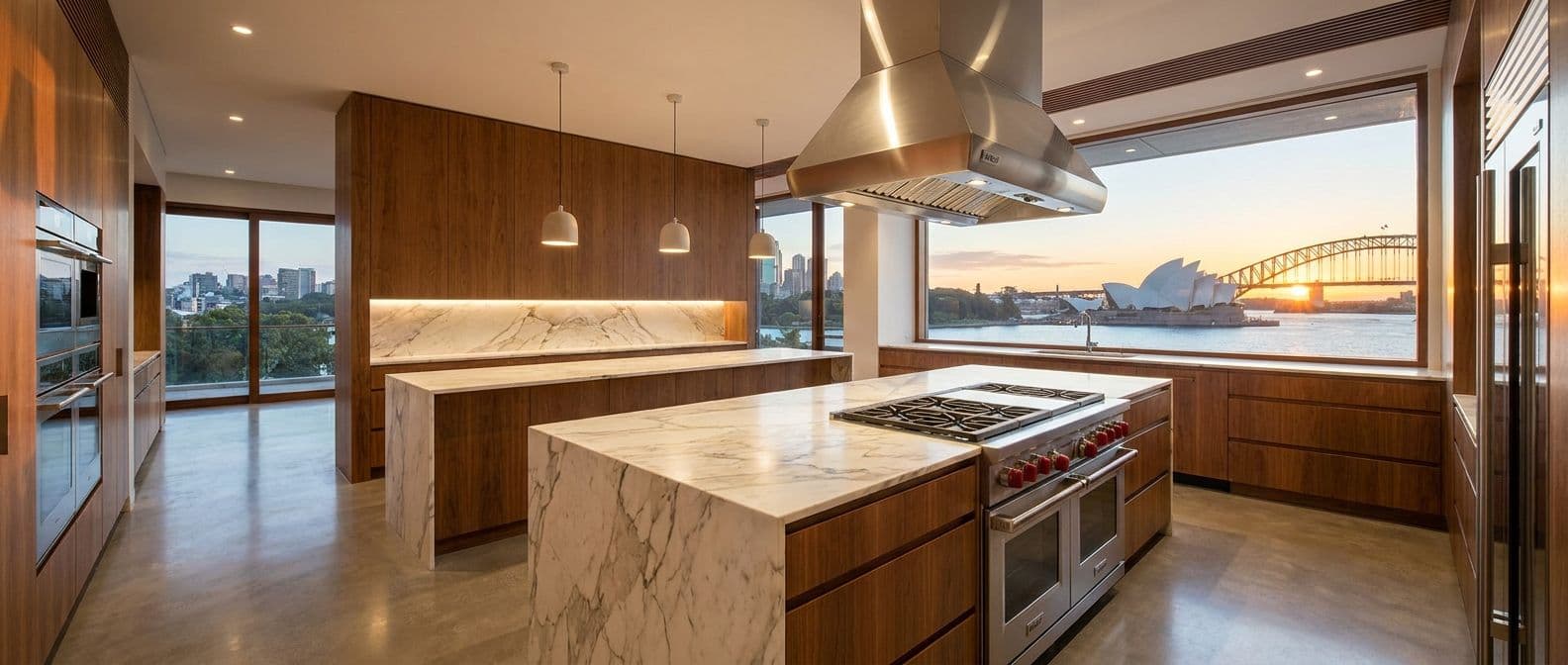
In the modern Australian luxury residence, the kitchen has evolved far beyond a mere utility space. In 2026, it is the 'Gourmet Heart' of the home—a sophisticated laboratory of culinary precision, a gallery of bespoke design, and a significant financial asset. For the epicurean homeowner, a professional-grade kitchen often represents a six-figure investment, featuring imported stone, custom-engineered ventilation, and industrial-capacity appliances that demand the same level of protection as a fine art collection or a fleet of luxury vehicles.
When the rebuild cost of a home exceeds $3 million, the kitchen often accounts for a substantial portion of that value. Protecting these assets requires more than a generic policy; it necessitates a nuanced understanding of high-value home insurance that recognises the true cost of sourcing, installing, and restoring professional-grade culinary infrastructure.
The Anatomy of a Professional-Grade Kitchen
Understanding the risk begins with identifying the specific assets that elevate a kitchen to professional status. In 2026, these spaces are characterised by several high-value components:
- Appliance Suites: Integrated Sub-Zero refrigeration, Wolf ranges, Gaggenau steam ovens, and La Cornue rotisseries.
- Specialised Surfaces: Rare Calacatta or Statuario marble benchtops, often book-matched and imported from Italy, or custom-poured zinc and stainless steel surfaces.
- Bespoke Cabinetry: Hand-finished timber or lacquered cabinetry with motorised opening systems and integrated smart lighting.
- Climate Control: Dedicated wine cellars with redundant cooling systems and humidity sensors.
Why Standard Insurance Falls Short
The primary issue with mass-market home insurance is the 'average' clause and 'per-item' limits. A standard policy may cap the replacement cost of appliances at a level that doesn't cover a single professional-grade refrigerator, let alone a full suite. Furthermore, standard policies often lack the provision for 'matched sets.' If one piece of a bespoke marble splashback is damaged, a standard policy might only pay to replace that specific tile, leaving you with a mismatched finish. A luxury home insurance policy provides 'Extended Replacement Cost' and ensures that rare materials are replaced in their entirety to maintain aesthetic integrity.
Risk Management: Defending the Culinary Assets
Prevention is the first line of defence in protecting the gourmet heart of your home. Professional-grade equipment introduces specific risks that must be managed through technology and maintenance.
1. Fire Mitigation and Ventilation
High-BTU (British Thermal Unit) burners used in professional ranges generate significantly more heat than domestic models. This necessitates industrial-strength extraction systems. To manage risk, homeowners should ensure their ventilation systems are professionally cleaned every six months to prevent grease build-up—a leading cause of kitchen fires. Advanced fire suppression systems, similar to those used in commercial kitchens but scaled for residential use, can often result in premium discounts.
2. Water Damage and Smart Sensors
With the proliferation of integrated steam ovens, plumbed coffee machines, and dual dishwashers, the number of potential leak points in a luxury kitchen has tripled. In 2026, the use of smart leak detection systems—such as those that automatically shut off the main water valve when a drip is detected under a cabinet—is a hallmark of a well-protected home.
3. Electrical Safeguards
Professional appliances are sensitive to voltage fluctuations. The installation of whole-home surge protection is essential to prevent the delicate circuit boards of a $20,000 oven from being fried during a typical Australian summer storm. Insurance policies should be reviewed to ensure they include comprehensive 'fusion' and 'motor burnout' cover.
The Role of Heritage and Custom Architecture
For those living in Australia’s historic mansions, the challenge is twofold. Integrating modern, heavy-duty culinary equipment into a heritage-listed structure requires specialist engineering. Protecting these installations requires heritage home insurance, which understands the complexities of 'like-for-like' restoration using period-correct methods while accommodating modern high-tech upgrades.
Smart Kitchens and Cybersecurity in 2026
As we move further into 2026, the 'Internet of Things' (IoT) has become deeply embedded in the kitchen. Wi-Fi-enabled ovens, refrigerators that track inventory, and voice-controlled lighting systems are standard. However, these systems introduce a cyber-physical risk. A compromised home network could allow a malicious actor to remotely activate an oven or disable a refrigerator. Modern asset protection now includes ensuring that your smart kitchen is on a secured, partitioned network, and that your insurance policy covers cyber-related physical damage.
Preserving Longevity: A Checklist for Culinary Assets
To maintain the value and safety of your professional-grade kitchen, a rigorous maintenance schedule is required. This not only preserves the asset but also demonstrates 'due diligence' to your insurer in the event of a claim.
- Annual Calibration: Professional ranges and ovens should be calibrated annually by certified technicians to ensure temperature accuracy and gas safety.
- Stone Sealing: High-porosity marbles should be professionally sealed every 12-24 months to prevent permanent etching from acidic ingredients.
- Refrigeration Servicing: Cleaning condenser coils on high-end fridges like Sub-Zero is vital to prevent motor burnout and maintain energy efficiency.
- Filter Replacement: Ensure that high-capacity water filters for ice makers and integrated coffee systems are replaced on schedule to prevent internal scaling.
The Financial Imperative of Accurate Valuation
In 2026, the cost of materials and specialist labour in Australia remains at historic highs. If you have recently renovated or upgraded your kitchen, your previous sum insured is likely obsolete. It is critical to conduct a professional valuation that accounts for the 'installed cost' of your culinary assets. This includes the cost of specialized trades, such as master stonemasons and electrical engineers, who are required to install professional-grade equipment.
Whether you are a professional chef who has brought the workplace home or a passionate amateur who demands the very best, your kitchen is more than a room—it is an investment in lifestyle and property value. By combining proactive risk management with a tailored insurance solution, you can ensure that the gourmet heart of your home continues to beat for decades to come.
Frequently Asked Questions
Does standard home insurance cover professional-grade appliances like Sub-Zero or Wolf?
Standard policies often have 'per-item' limits that are insufficient for the replacement cost of professional-grade appliances. A high-value home insurance policy is typically required to ensure full 'new-for-old' replacement without being capped by standard sub-limits.
Are bespoke marble benchtops and custom cabinetry covered under accidental damage?
Many luxury policies include accidental damage as standard, covering events like heavy items cracking a stone benchtop or liquids staining rare marble. It is essential to ensure your sum insured reflects the cost of sourcing and installing identical materials, such as specific book-matched Calacatta marble.
How does smart kitchen technology impact my insurance risk?
Smart technology, such as automated leak detectors and remote shut-off valves, can significantly reduce the risk of water damage. In 2026, many insurers look favourably upon these installations, potentially offering more competitive premiums for homes with proactive risk management systems.
What happens if a power surge destroys the electronics in my high-end kitchen?
Bespoke culinary assets are highly sensitive to electrical fluctuations. You should ensure your policy includes 'Fusion and Motor Burnout' or 'Electronic Equipment' cover, specifically tailored to the high-voltage requirements of professional-grade kitchen suites.
Related insights
Explore our cover

Andre LangHigh-value home insurance specialist
Andre Lang is a high-value home insurance specialist who advises owners of architecturally significant and high-net-worth Australian homes on protecting their property, fine art, and collections.